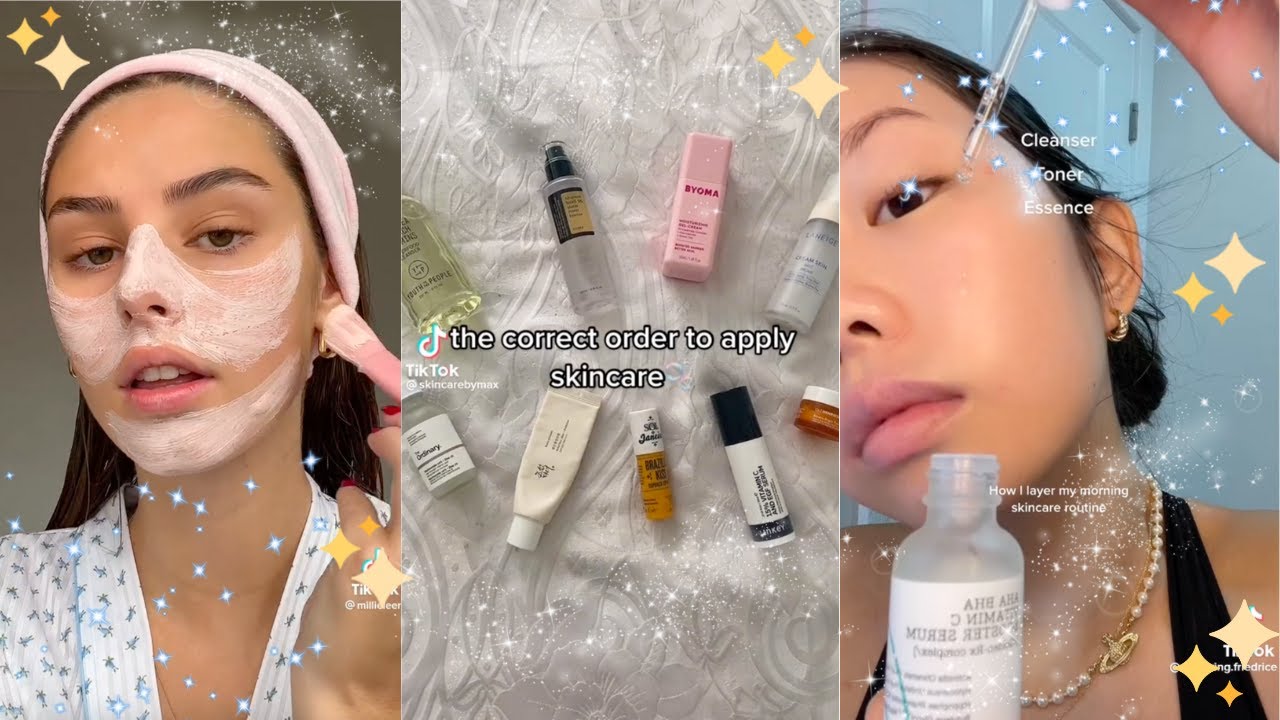
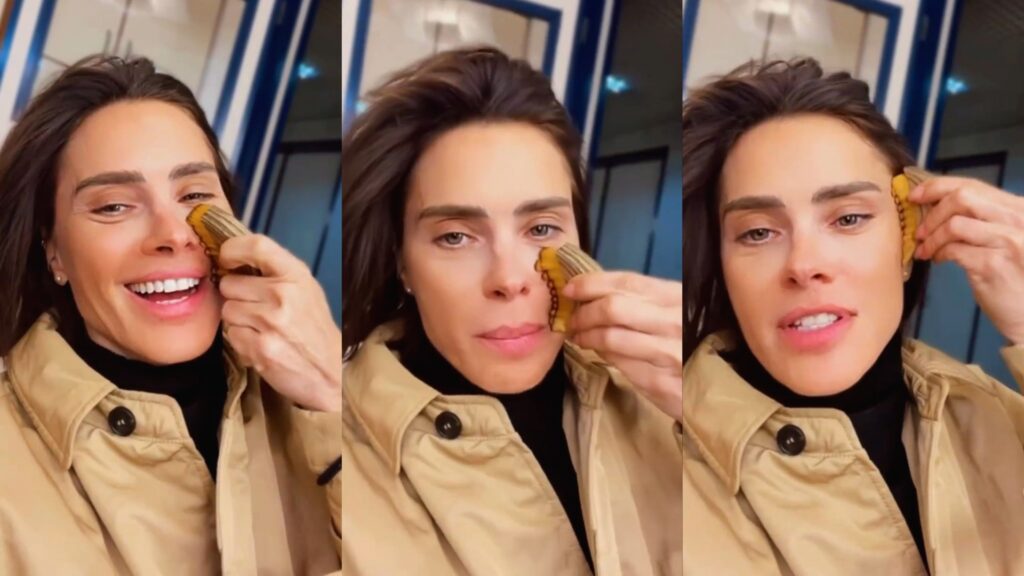
You've probably seen a celebrity on social media using a small brush on their face during their skincare routine. The accessory went viral for promising more beautiful, less puffy, more radiant skin with better product absorption.
The trend gained momentum after being associated with names like Virginia, Carolina Dieckmann, Letícia Colin, and Flávia Alessandra, according to a report that highlighted the use of the facial brush on social media. The most common promise is simple: to massage the face, aid in drainage, and improve the appearance of the skin.
But the question that really matters is: Does this brush work for everyone?
The answer is: it depends. It can help in some cases, mainly as a complement to gentle massage and product application. But it can also irritate, sensitize, worsen acne, aggravate rosacea, and damage the skin barrier when used forcefully, excessively frequently, or on the wrong skin.
In this article, you will understand what a skincare brush can actually do, what it can't do, who should avoid it, and how to use it more safely.
Schedule your personalized evaluation with Dr. Renata!
Table of Contents
What is the skincare brush that went viral?
A skincare brush is a facial accessory used to massage the skin, spread products, or aid in cleansing. Some models have soft bristles, others are made of silicone, and many have become known as part of routines inspired by Korean skincare.
In practice, there are two main uses:
- Facial cleansing brush: Used with soap or cleansing gel.
- Facial massage brush: Used with a suitable serum, moisturizer, or facial oil.
The difference is important. When used for cleansing, it increases friction on the skin. When used for massage, it can temporarily help reduce puffiness and promote relaxation, provided the movements are gentle.
The brush is not a medical treatment. It's a skincare accessory. It may be pleasant and useful for some people, but it should not be seen as a solution for sagging skin, wrinkles, acne, blemishes, or collagen loss.
Summary: The brush is an accessory to support your routine, not a dermatological procedure.
Why did the little brush become famous on social media?
The brush became famous because it combines three factors that easily go viral: celebrities using it, a visually appealing skincare routine, and the promise of quick results on the face. Many people like the idea of simple, affordable skincare that provides an immediate feeling of more "awake" skin.
The news report about the trend highlighted that the accessory went viral for promising to reduce swelling and improve the appearance of the skin. A dermatologist interviewed for the article explained that it can temporarily help with fluid drainage, stimulate circulation, and better spread products, but warned that the effects are temporary.
This point is essential: the result seen in the video can be influenced by lighting, makeup, filter, angle, complete routine, previous procedures, and individual skin characteristics.
The mistake is to assume that because it worked well in a celebrity's video, it will work the same way on everyone's skin.
Summary: The brush went viral due to its visual appeal and promise of quick results, but it needs to be used with a critical eye.
Does the skincare brush really work?
The brush can function as an auxiliary tool to gently massage the skin, spread products, and give a temporary sensation of a less puffy face. However, it does not treat the cause of sagging, blemishes, wrinkles, acne, or collagen loss.
The most realistic effect is immediate and temporary. The skin may appear more vibrant right after the massage because there has been mechanical stimulation, a slight increase in local circulation, and better distribution of the product.
But that doesn't mean there has been profound rejuvenation.
What can she do?
- to help spread moisturizer or serum;
- to promote gentle massage;
- to give a temporary sensation of reduced swelling;
- to make the routine more enjoyable;
- It can help remove debris, if used correctly;
- to temporarily improve the appearance of freshness.
What she doesn't do
- It does not stimulate collagen like medical technologies;
- It does not replace professional facial cleansing;
- It does not treat acne;
- It does not reduce sagging;
- does not define jaw;
- It does not treat stains;
- It doesn't close pores permanently;
- It is not a substitute for sunscreen, moisturizer, or dermatological treatment.
Summary: It may improve the temporary feel and appearance of the skin, but it doesn't deliver profound results.
Does it reduce facial swelling?
It can temporarily reduce the feeling of swelling, especially when used with gentle massage movements. This effect is usually linked to the drainage of superficial fluids and mild circulatory stimulation.
But it's important to understand: this reduction in puffiness is not facial slimming, it doesn't remove fat, and it doesn't change the structure of the face.
The face may appear more puffy for several reasons:
- poor sleep;
- alcohol consumption;
- excess salt;
- fluid retention;
- menstrual period;
- allergies;
- sinusitis;
- hormonal changes;
- inflammation of the skin;
- recent procedures.
If the swelling is persistent, asymmetrical, painful, or associated with redness, itching, or shortness of breath, it should not be treated with a toothbrush. Medical evaluation is necessary.
Summary: The brush can help with mild and temporary swelling, but it does not treat medical causes of facial edema.
Does a small brush clean the skin better?
Not always. On some skin types, a facial brush can help with cleansing. On others, it can over-cleanse and cause irritation. The American Academy of Dermatology recommends washing your face with a gentle cleanser, warm water, and your fingertips, warning that using a sponge, cloth, or other object can irritate the skin.
This care is important because many people confuse clean skin with skin that feels tight. Clean skin doesn't need to feel stretched, burning, or red.
When the brush is used forcefully, it can remove more than just dirt: it can damage the skin barrier, which is the skin's protective layer.
It can be worse for those who have
- sensitive skin;
- rosacea;
- dermatitis;
- inflamed acne;
- irritated melasma;
- dry skin;
- damaged skin barrier;
- recent use of acids or retinoids.
The Cleveland Clinic also advises people with rosacea to avoid harsh cleansers, exfoliants, and abrasive rubbing, as this can worsen symptoms.
Summary: For many people, using their fingers remains the safest way to wash their face.
Does it improve the absorption of products?
The brush can help to spread products like moisturizers and serums better, but this doesn't mean the skin will absorb more of the active ingredient in a clinically relevant way. The feeling of better absorption may come from massage and more even distribution.
This point deserves attention. Forcing products into the skin isn't necessarily better. In sensitive skin, increased friction can lead to burning, redness, and irritation.
If the product contains active ingredients such as vitamin C, acids, retinol, or anti-acne formulas, using the brush with it may increase the chance of discomfort.
Best combination
The toothbrush, when indicated, is usually better tolerated with:
- simple moisturizer;
- soothing serum;
- hyaluronic acid;
- Fragrance-free products;
- formulas designed to protect the skin barrier.
Worst combination
Avoid using with:
- exfoliating acids;
- retinoids;
- Vitamin C is very irritating;
- Strong anti-acne products;
- physical exfoliants;
- Drying masks;
- Formulas containing alcohol or strong fragrance.
Summary: Spreading better doesn't necessarily mean treating better. On sensitive skin, less friction is usually safer.
Does the brush help with sagging skin or facial contouring?
Not in a real or lasting way. The brush does not treat sagging skin, does not lift the face, and does not stimulate collagen in depth like dermatological technologies. It may give a temporary sensation of firmer skin immediately after the massage, but this effect is not equivalent to a lifting treatment.
Sagging occurs due to collagen loss, changes in facial fat, bone changes, muscle action, genetics, sun exposure, age, and lifestyle. For this type of complaint, treatments need to act on deeper layers.
In cosmetic dermatology, when the complaint is firmness or contour, the following may be evaluated:
- Microfocused ultrasound, such as Liftera 2;
- radiofrequency, such as CoolFase;
- collagen biostimulators, such as Sculptra and Radiesse;
- lasers;
- Fill in on selected cases;
- combined protocols.
The brush can be part of a self-care routine, but it should not be sold as an alternative for sagging skin.
Summary: A small brush is not a substitute for technology, biostimulation, or dermatological evaluation.
Who can use the toothbrush more safely?
The brush may be better tolerated by people with healthy skin, without inflamed acne, active rosacea, dermatitis, or significant sensitivity. Even so, its use should be gentle and occasional.
It may make sense for those who want to:
- to make the routine more relaxing;
- Massage your face for a few minutes;
- Spread moisturizer;
- to help with mild swelling;
- Use as a complementary treatment, not as the primary treatment.
Ideally, start slowly. Instead of using it every day, try it once or twice a week and see how your skin responds.
Who should avoid using a facial brush?
Facial brushes should be avoided by those with inflamed acne, rosacea flare-ups, dermatitis, wounds, sunburn, infection, very sensitive skin, or who have recently undergone a procedure. In these cases, the friction can worsen the inflammation.
The article that reported on the trend also warned that excessive pressure can cause irritation, micro-lesions, and worsen acne, dermatitis, and rosacea, and advised against its use on wounds, burns, infections, or immediately after cosmetic procedures.
Avoid especially if you have:
- painful pimples;
- pustules;
- persistent redness;
- burning sensation with basic products;
- peeling;
- itch;
- post-peeling skin;
- skin after laser treatment;
- skin after microneedling;
- perioral dermatitis;
- active rosacea;
- recent allergy or irritation.
The National Rosacea Society also advises avoiding abrasive sponges or cloths when cleansing skin with rosacea, as they can cause irritation.
Summary: If the skin is inflamed, sensitive, or recovering, the brush may hinder its development.
Conclusion
The viral skincare brush favored by celebrities may seem simple and harmless, but it's not suitable for everyone. On some skin types, it can aid in massage, provide a temporary reduction in puffiness, and facilitate product application. On others, it can cause irritation, worsen acne, aggravate rosacea, and compromise the skin barrier.
The main point is not to turn a social media trend into a rule for your skin.
If you have sensitive skin, inflamed acne, rosacea, dermatitis, irritated melasma, or have recently undergone a procedure, it's best to avoid it. If your skin is resilient and you want to try it, start with infrequent use, gentle movements, and soothing products.
Effective skincare doesn't have to be aggressive. Often, the best results come from doing the basics well: gentle cleansing, moisturizing, sunscreen, and dermatological evaluation when there's a persistent complaint.
Brushing can become part of your routine, but it shouldn't be more important than the health of your skin.


Medical evaluation is essential to understand the patient's complaints, make an accurate diagnosis, and indicate the most appropriate protocol for each case. Each skin type has unique characteristics, and care must be personalized to ensure health and safety. Choosing a dermatologist who is a member of the Brazilian Society of Dermatology is crucial for your skin health.
Dr. Renata Ralha, Clinical, Aesthetic and Hair Dermatologist, CRM: 52-84102-1 RJ, RQE No.: 28115
In general, this isn't the best way to start. Daily use can irritate some skin types, especially sensitive ones. It's safer to test it once or twice a week and observe the response.
It does not treat acne. In inflamed acne, it can worsen irritation and spread inflammation. Those with acne should have a routine focused on controlling oiliness, inflammation, and comedones.
In most cases, it's best to avoid it, especially during periods of redness, burning, or flare-ups. Skin with rosacea tends to react badly to friction.
No. It may give a temporary feeling of reduced bloating, but it does not reduce fat, sagging skin, or structural double chin.
Not comparable to medical technologies. For collagen stimulation, treatments such as microfocused ultrasound, radiofrequency, and biostimulators have a more specific action.
No. Professional facial cleansing involves assessment, technique, and proper indication. The brush is just a household accessory.

Medical evaluation is essential to understand the patient's complaints, identify dermatological problems, and consider their individual characteristics, such as anatomy, skin type, and reactions to substances used. Based on this, it is possible to determine the appropriate techniques to naturally enhance the features of the face, skin, and body.
Choosing a dermatologist is crucial for a thorough analysis of the areas of disharmony in the patient and to determine the necessary techniques, whether it be increasing volume, correcting angles, or symmetry. With a personalized and exclusive treatment plan, it is possible to meet the specific needs of each patient while respecting their limitations.

Dr. Renata Ralha, Clinical, Aesthetic and Hair Dermatologist, CRM: 52-84102-1 RJ, RQE No.: 28115

Follow our WhatsApp channel: Dr. Renata Ralha!
This channel is for you to stay up-to-date on the best news about... dermatology, aesthetics and skincareIn addition to finding out about all the new publications, promotions and sweepstakes that we offer at the Renata Ralha Clinic!