If you're researching alternatives to plastic surgery, there's probably a question behind your search: "Do I really need surgery to get better?"
Perhaps you've noticed your face looking tired, your skin less firm, your double chin starting to bother you, your jawline less defined, or your wrinkles becoming more apparent. At the same time, you may be afraid of surgery, anesthesia, long recovery times, or ending up with an artificial result.
The good news is that not every aesthetic complaint requires surgery. Today, aesthetic dermatology offers non-surgical treatments that can progressively and naturally improve firmness, contour, texture, radiance, wrinkles, blemishes, and skin quality.
But it's important to be honest: non-surgical procedures They don't do the same thing as plastic surgery.They have specific indications, limitations, and best results when chosen in a personalized way.
This article will help you understand what alternatives exist, when they make sense, and when surgery may still be the best option.
Schedule your personalized evaluation with Dr. Renata!
Table of Contents
Do I really need plastic surgery?
Not always. Many people who consider plastic surgery are still at a stage where it's possible to improve with non-surgical treatments, especially when the complaint involves mild to moderate sagging, loss of radiance, expression lines, uneven texture, blemishes, or the beginning of loss of facial contour.
Surgery is usually considered when there is a significant excess of skin, advanced sagging, or structural changes that do not respond well to technologies and injectables.
In practice, what defines the best option is not just age. It's the combination of factors:
- skin quality;
- degree of sagging;
- loss of volume;
- presence of spots;
- facial muscle strength;
- face shape;
- Patient's expectation;
- history of procedures;
- availability for recovery;
- A desire for a more subtle or more intense result.
Therefore, two people of the same age may need completely different treatments.
Summary: You may not need surgery, but you need to understand if your complaint is treatable with non-surgical methods.
What are non-surgical procedures?
Non-surgical procedures are treatments performed without incisions, without hospitalization, and, in most cases, with a quick return to routine. They may use technologies, injectables, or combinations of techniques to gradually improve skin and contours.
The main ones include:
- Microfocused ultrasound, such as Liftera 2;
- radiofrequency, such as CoolFase;
- collagen biostimulators, such as Sculptra and Radiesse;
- botulinum toxin;
- Fillers with hyaluronic acid;
- lasers;
- pulsed light;
- Skinbooster;
- Profhilo;
- Peels, in selected cases.
These treatments are not intended to "transform" the face. When properly indicated, they help to restore firmness, soften signs of aging, improve texture, and preserve naturalness.
Summary: Non-surgical procedures are options for improving appearance without surgery, but they need to be chosen according to your skin type.
What problems can improve without surgery?
Many signs of aging can improve without surgery, especially when they are still in their early or moderate stages. The most important thing is to identify the cause of your complaint.
Sometimes, patients say, "My face is sagging." But this can happen for different reasons. It could be sagging skin, loss of collagen, loss of volume, skin lacking firmness, a double chin, or even a tired expression.
Here are some examples:
| Patient complaint | What could be happening? | Treatments that can be evaluated |
|---|---|---|
| Tired face | wrinkles, loss of radiance or dark circles | Botox, Skinbooster, Profhilo, laser, fillers in selected cases. |
| Less defined jawline | sagging or loss of support | Liftera 2, CoolFase, biostimulators |
| Soft or thin skin | collagen loss | Sculptra, Radiesse, radiofrequency, microfocused ultrasound |
| Wrinkles when smiling or frowning | muscle contraction | Botulinum toxin |
| Spots and uneven tone | sun, melasma or inflammation | Laser, pulsed light, skincare and photoprotection |
| Dull skin | dehydration and uneven texture | Skinbooster, Profhilo, laser, peelings |
| Discreet double chin | sagging skin or localized fat | microfocused ultrasound, radiofrequency or other protocols |
The most common mistake is choosing a procedure based on its name, and not on the skin's needs.
Summary: The best treatment isn't the most famous one. It's the one that addresses the root cause of your complaint.
What can Liftera 2 do for sagging skin?
The Liftera 2 is a micro-focused ultrasound technology designed to stimulate collagen in the deeper layers of the skin. It can help with firmness, facial contouring, and mild to moderate sagging, without surgery.
He is often sought out by patients who notice:
- less firm face;
- beginning of facial drooping;
- slight double chin;
- Less pronounced jawline;
- slightly drooping eyebrows;
- Neck with loss of firmness;
- mild to moderate body flaccidity.
The result is not like that of surgery. It is usually progressive because it depends on the body's response to collagen stimulation.
Who would find this useful?
Liftera 2 may be an interesting option for those who want to improve firmness and contour without surgery, hospitalization, or prolonged downtime.
When might it not be enough?
When there is a large excess of skin or advanced sagging, microfocused ultrasound can improve skin quality, but may not deliver the expected degree of lifting.
Summary: Liftera 2 may be a good alternative for mild to moderate sagging, but it does not replace surgery in all cases.
What can CoolFase do for skin firmness?
CoolFase is a monopolar radiofrequency technology with cooling. It heats deep layers of the skin in a controlled manner to stimulate collagen and improve firmness, density, and skin quality.
It may be indicated when the patient feels that their skin is:
- looser;
- less firm;
- thinner;
- with less defined facial contours;
- with mild to moderate sagging;
- with loss of support.
An important point is that CoolFase is not a procedure to "change your face." It works on the quality and firmness of the skin, with progressive improvement.
What is the difference between CoolFase and Liftera?
Simply put:
| Treatment | Technology | Main focus |
| Liftera 2 | microfocused ultrasound | Firmness, contouring, and deep collagen stimulation. |
| CoolPhase | monopolar radiofrequency | firmness, density and skin quality |
In many cases, the technologies can be complementary, but this depends on the assessment.
Summary: CoolFase can help those seeking firmer and improved skin without surgery or needles.
What are collagen biostimulators used for?
Collagen biostimulators are injectable treatments that stimulate the skin to produce new collagen. They help improve firmness, thickness, support, and skin quality over time.
The best known are:
- sculptra, based on poly-L-lactic acid;
- Radiesse, based on calcium hydroxyapatite.
They may be indicated for patients who notice:
- thinner skin;
- mild to moderate sagging;
- loss of firmness;
- face with a more "melted" appearance;
- Aging neck or décolletage;
- flabby arms, abdomen, or buttocks;
- The desire to progressively stimulate collagen production.
Does biostimulator plump the face?
No. The main purpose of a biostimulator is to improve collagen and firmness. It should not be used to make the face appear fuller.
When there is excess or inappropriate indication, the result can look artificial. Therefore, the technique, quantity, and choice of product are fundamental.
Summary: Biostimulators are indicated for improving skin firmness and quality, not for "puffing up" the face.
What does Botox help with?
Botulinum toxin, popularly known as Botox, helps to smooth expression lines. It works by temporarily relaxing muscles that form wrinkles when the face moves.
It may be suitable for:
- Forehead wrinkles;
- lines between the eyebrows;
- chicken feet;
- gummy smile;
- some wrinkles on the neck;
- bruxism, in selected cases;
- Excessive sweating.
Botox does not treat sagging skin, blemishes, loss of volume, or skin texture. It is excellent when the main complaint stems from muscle movement.
Does Botox make your face look artificial?
There's no need to leave it. An artificial result usually occurs when there is an overdose, inappropriate application points, or an attempt to completely paralyze the expression.
A good result should soften, not freeze.
Summary: Botox is indicated for wrinkles caused by movement and can maintain a natural expression when applied correctly.
Is facial filler always necessary?
No. Fillers are not always necessary. They are indicated when there is volume loss, a need for support, wrinkles, shadows, or specific disproportions.
Hyaluronic acid fillers can be used in areas such as:
- dark circles under the eyes;
- lips;
- cheekbones;
- chin;
- jaw;
- temples;
- grooves;
- facial contour.
But it shouldn't be used as a cure-all. Often, patients think they need fillers, but the real need is to improve collagen, texture, or sagging skin.
When can filler look artificial?
When done excessively or used to compensate for sagging skin that should be treated in another way, a heavy, puffy, or overly marked face usually results from inappropriate treatment.
Summary: Dermal fillers can be very aesthetically pleasing when properly indicated, but they should not be used as an automatic substitute for a facelift.
Do lasers and pulsed light improve skin without surgery?
Yes. Lasers and pulsed light are non-surgical alternatives to improve skin quality. They can treat blemishes, uneven texture, pores, broken capillaries, redness, scars, fine lines, and dullness.
In practice, they may be suitable for those bothered by:
- Sunspots;
- melasma, in selected cases;
- redness;
- small vases;
- enlarged pores;
- acne scars;
- rough skin;
- irregular texture;
- fine wrinkles;
- loss of brightness.
The choice of technology depends on skin type, skin color, tendency to blemishes, history of melasma, and available recovery time.
Can anyone get laser hair removal?
No. Some skin types require preparation beforehand. In patients with melasma, tanned skin, or a tendency towards hyperpigmentation, the recommendation needs to be even more careful.
Summary: Lasers and pulsed light can greatly improve the skin, but they need to be chosen carefully.
Do Skinbooster and Profhilo improve skin radiance?
Yes. Skinbooster and Profhilo are treatments focused on skin quality. They are not intended to change the shape of the face, but rather to improve hydration, elasticity, texture, and radiance.
Skinbooster
Skinbooster is an injectable treatment with non-volumizing hyaluronic acid. It deeply hydrates the skin and can improve fine lines, luminosity, and texture.
It may be suitable for:
- dry skin;
- fine lines;
- lack of vitality;
- irregular texture;
- neck, chest and hands;
- Dry lips, without necessarily increasing in volume.
Skinbooster
Profhilo is a bioremodeling product based on ultra-pure hyaluronic acid. It helps with deep hydration and stimulates collagen and elastin production, improving the overall quality of the skin.
It may be suitable for:
- mature skin;
- loss of elasticity;
- mild sagging;
- tired appearance;
- thin skin;
- face, neck, chest and hands.
Summary: Skinbooster and Profhilo are good options for those who want more hydrated, luminous, and healthy skin without altering their features.
Which treatment is best for my case?
The best treatment depends on what is causing your complaint. Therefore, a dermatological evaluation is essential before choosing any procedure.
Many people come to the office saying:
"I want to get Botox."
"I want to get fillers."
"I want to do Liftera."
"I want something so I don't need surgery."
But after the evaluation, sometimes the diagnosis changes. This happens because the visible complaint may have another cause.
Practical examples
If the problem is wrinkles that appear when moving the face, Botox might be the right option.
If the problem is loss of firmness, perhaps the focus should be on biostimulators, Liftera, or CoolFase.
If there are blemishes and uneven texture, laser or pulsed light treatment may be more suitable.
If your skin is dull, Skinbooster or Profhilo may be helpful.
If there is volume loss, filler may be considered.
If there is a significant excess of skin, surgery may be the best solution.
Summary: There is no single best treatment for everyone. There is only the best plan for your skin.
When might plastic surgery still be necessary?
Plastic surgery may be necessary when there is significant excess skin, advanced sagging, or structural changes that cannot be corrected using only technology and injectables.
This can happen in cases of:
- large amount of excess skin on the face;
- intense sagging in the neck;
- significant eyelid bags;
- large double chin;
- abdomen with excess skin;
- abdominal diastasis;
- breasts with significant sagging;
- significant weight loss.
In these cases, non-surgical procedures can still improve skin quality, but may not deliver the results the patient expects.
Being honest about this is fundamental. Good aesthetic dermatology doesn't promise what a treatment can't deliver.
Summary: Surgery still has its place. The important thing is knowing when it's truly necessary and when less invasive alternatives exist.
How to avoid an artificial result?
To avoid an artificial result, the first step is not to treat the face as a sum of isolated procedures. The face needs to be evaluated as a whole: skin, muscles, fat, bones, proportions, and expression.
A natural outcome depends on:
- correct diagnosis;
- precise indication;
- conservative doses when necessary;
- respect for anatomy;
- appropriate choice of technologies;
- correct intervals between procedures;
- realistic expectation;
- medical follow-up.
It's also important to avoid the idea of "doing everything at once." In many cases, the best results come from progressive planning.
Conclusion
You don't need to rush into plastic surgery just because you've noticed signs of aging, sagging, or loss of contour. In many cases, non-surgical alternatives can naturally improve firmness, texture, radiance, wrinkles, blemishes, and skin quality.
Treatments such as Liftera 2, CoolFase, collagen biostimulators, Botox, fillers, lasers, pulsed light, Skinbooster, and Profhilo can be excellent when properly indicated.
But they are not all the same. And they are not a substitute for surgery in every situation.
The best choice begins with an individualized assessment. This allows us to understand if your skin needs collagen stimulation, technology, deep hydration, botulinum toxin, fillers, laser treatment, or, in some cases, surgical evaluation.
The goal shouldn't be to change who you are. It should be to care for your skin safely, preserve its naturalness, and choose the right treatment for the right time.
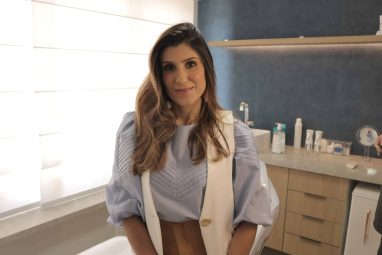

Medical evaluation is essential to understand the patient's complaints, identify dermatological problems, and consider their individual characteristics, such as anatomy, skin type, and reactions to substances used. Based on this, it is possible to determine the appropriate techniques to naturally enhance the features of the face, skin, and body.
Choosing a dermatologist is crucial for a thorough analysis of the areas of disharmony in the patient and to determine the necessary techniques, whether it be increasing volume, correcting angles, or symmetry. With a personalized and exclusive treatment plan, it is possible to meet the specific needs of each patient while respecting their limitations.
Dr. Renata Ralha, Clinical, Aesthetic and Hair Dermatologist, CRM: 52-84102-1 RJ, RQE No.: 28115
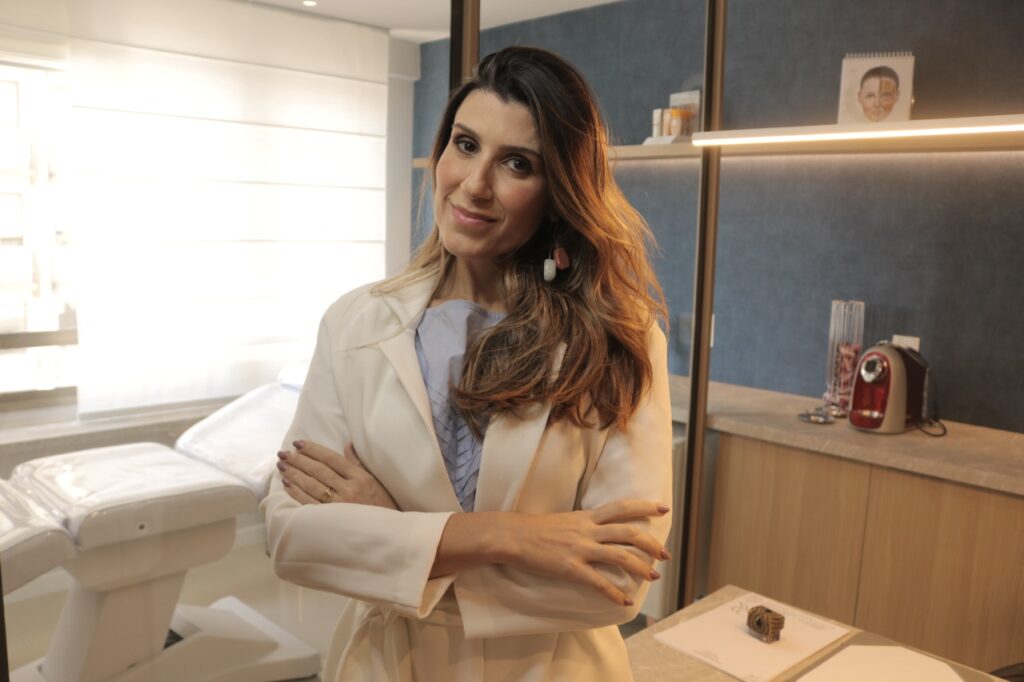
Medical evaluation is essential to understand the patient's complaints, identify dermatological problems, and consider their individual characteristics, such as anatomy, skin type, and reactions to substances used. Based on this, it is possible to determine the appropriate techniques to naturally enhance the features of the face, skin, and body.
Choosing a dermatologist is crucial for a thorough analysis of the areas of disharmony in the patient and to determine the necessary techniques, whether it be increasing volume, correcting angles, or symmetry. With a personalized and exclusive treatment plan, it is possible to meet the specific needs of each patient while respecting their limitations.

Dr. Renata Ralha, Clinical, Aesthetic and Hair Dermatologist, CRM: 52-84102-1 RJ, RQE No.: 28115
Follow our WhatsApp channel: Dr. Renata Ralha!
This channel is for you to stay up-to-date on the best news about... dermatology, aesthetics and skincareIn addition to finding out about all the new publications, promotions and sweepstakes that we offer at the Renata Ralha Clinic!
Yes. In many cases, it's possible to improve firmness, wrinkles, radiance, texture, blemishes, and contour with non-surgical procedures. The best option depends on the degree of aging and the quality of the skin.
No non-surgical procedure can completely replace a facelift. Technologies such as Liftera 2, CoolFase, and biostimulators can help with mild to moderate sagging, but they do not remove significant excess skin.
The sensation varies from person to person. There may be thermal discomfort or stinging during application, but it is generally a well-tolerated procedure.
In most cases, the return to routine is quick. There may be mild redness or a temporary warming sensation, depending on the skin type and the parameters used.
Yes. The result is progressive because it depends on the body's own collagen production. Improvement usually appears over weeks and months.
No. Botox relaxes muscles to smooth expression lines. Fillers restore volume, structure, or improve proportions in specific areas.
Avoid excessive fillers, procedures without proper evaluation, copying the faces of celebrities, and undergoing numerous treatments without planning. Naturalness depends on proper indication.
It depends on the degree of sagging. Liftera 2, CoolFase, and biostimulators may be options in mild to moderate cases. Advanced sagging may require surgery.
Yes, in many cases the combination is possible and even desirable. But the order, interval, and indication should be defined in consultation.
The best approach is to undergo an evaluation. If there is significant excess skin or advanced sagging, surgery may be considered. If the complaint is mild or moderate, non-surgical alternatives may be sufficient.