If you've ever heard of "CoolFase" and "cryolipolysis" and felt like they were "the same thing with different names," this misconception is more common than you think. The problem is that the names may sound similar, but the treatment target is usually different.
The safest way to decide is not by the name of the procedure. It's by asking a simple question: Is what bothering you more skin (sagging and quality) or more volume (localized fat)?
When you understand this, it becomes much harder to fall for the wrong advice or create expectations that the procedure wasn't designed to fulfill.
Direct route to zero positioning:
CoolFase is a monopolar radiofrequency treatment with cooling, used to improve skin quality and firmness. Cryolipolysis is controlled cooling focused on reducing localized fat.
Schedule your personalized evaluation with Dr. Renata!
Table of Contents
Are CoolFase and cryolipolysis the same thing, or do they treat different problems?
They address different problems. The confusion arises because both appear in the aesthetic universe and, on the internet, "contour" becomes an umbrella word for everything.
-
Cryolipolysis is a technology of controlled cooling geared towards localized fat reduction.
-
CoolPhase is a piece of equipment Monopolar radiofrequency with contact coolingDesigned to deliver deep heat with surface cooling, focusing on comfort and skin care.
- What is the difference between CoolFase and CoolSculpting? Understand what each one treats and how to make the right choice. Click here!
Why do names cause confusion, and what decision-making error occurs most often in the doctor's office?
The mistake I see most often is this: the person arrives saying "I want to improve my contour," but no one has stopped to determine if the contour is bad because of:
-
localized fat,
-
sagging and skin quality,
-
both at the same time.
When these aspects aren't separated, the person tries to solve a skin problem with a fat grafting technology, or vice versa. And frustration arises even when the procedure was done well.
"Sagging skin," "double chin," and "contouring" are symptoms, but they can have different causes: how do you tell them apart?
A simple way to organize your thoughts before making a decision:
-
Flaccidity It's usually more about support, elasticity, and skin quality.
-
Dewlap It could be fat, skin, or a combination.
-
Boundary It can improve by reducing volume or by improving firmness. These are different approaches.
If you use the same words for different things, you increase the chance of choosing the wrong solution.
What does each one address in practice, and what does it not address?
The key here is to understand the "target" of the treatment, not the promise.
If the main complaint is sagging and skin quality, which one tends to make sense?
When the main concern is looser skin, poorer texture, loss of firmness, and that "sagging" look, the conversation usually turns to technologies that deliver... controlled heating to promote dermal remodeling and collagen stimulation. Monopolar radiofrequency fits into this reasoning.
In my practice as a dermatologist, this focus on skin and collagen is central to managing aging. Therefore, in my clinic, I perform... CoolPhase, not cryolipolysis.
What this doesn't mean: it doesn't mean "solving all sagging." The degree of sagging and the quality of the skin change the plan and the potential for a solution.
If the main complaint is localized fat, which one tends to make sense?
When the problem is a localized, well-defined "volume" that isn't just sagging skin, cryolipolysis is often discussed because its principle is to act on adipose tissue through controlled cooling.
What this does not mean: it is not a comprehensive weight loss treatment, and it does not replace habits or other strategies when the goal is to lose weight.
How does each technology act on the body, and what criteria help in making a decision?
Here's what changes the game: which fabric each technology is trying to target.
What does monopolar radiofrequency with cooling mean in CoolFase, and what is the treatment target?
Monopolar radiofrequency is a way of delivering energy that generates controlled heating in the layers of the skin. This warming is associated with processes of dermal remodeling and collagen stimulation in experimental and clinical studies.
In CoolFase, the technical concept disclosed by the manufacturer involves Contact cooling at the tip, with the aim of reducing discomfort and protecting the surface while energy is being delivered.
Main target, in simple language: skin and firmness...within what is indicated for your case.
What does controlled cooling mean in cryolipolysis, and what is the target of the treatment?
In cryolipolysis, the goal is to apply controlled cold to target adipose tissue in the treated area and reduce localized fat.
The FDA itself describes cryolipolysis as part of non-invasive body contouring technologies and highlights that there is a rare event called paradoxical adipose hyperplasia (PAH) which is reported as a phenomenon in "fat freezing".
Main target, in simple language: localized fat.
"Better contouring" can come from different sources: when is it skin and when is it fat?
Many people want the same visual result, but for different reasons.
If the area improves when you hold it with your hand, does this suggest more skin or more volume?
Generally, when you hold the area with your hand and it "returns to its place," this suggests that part of the discomfort is... fall and supportThat is, it relates to skin components and sagging. It's not a diagnosis, but it's a useful indication to bring to the consultation.
The correct step is to confirm the following during a physical examination: texture, thickness, skin quality, and degree of sagging.
If the area feels "full" and pinchable, does this suggest more volume or more sagging?
When the region is clearly "full" and you can pinpoint a consistent volume, this usually suggests more of a component of volume...which could be localized fat. Again, only an evaluation confirms this. But this reasoning avoids making an impulsive choice.
What risks and limitations need to be honestly considered?
Reliable content discusses limits and risks without sensationalism.
What are the most discussed adverse effects of cryolipolysis, including the rare ones?
In addition to transient local effects that can occur in such procedures, there is a rare but important complication to be aware of: paradoxical adipose hyperplasia (PAH).
The FDA describes PAH as a phenomenon in which fatty tissue grows instead of shrinking in the treated area, reported as something “unique to fat freezing,” with cases appearing around 2 to 5 months after the procedure, and surgery may be required for correction.
Medical reviews also describe PAH as a rare complication, presenting weeks to months after cryolipolysis.
This is not meant to generate fear. It's so that the decision is made informed.
What precautions and restrictions are typically relevant in controlled heating technologies?
In controlled heating technologies, safety depends on:
-
assessment of your history and your skin,
-
appropriate parameters and correct technique,
-
realistic expectation alignment,
-
Assistance when needed.
The practical point is: there is no "one-size-fits-all" tip. That's why, as a dermatologist, I prioritize thorough evaluation and individualized protocols.
What constitutes a "good assessment plan" to avoid making the wrong recommendation?
A good evaluation plan protects you from two risks: wasting energy in the wrong place and creating expectations that no one will be able to meet.
What signs require an in-person evaluation and physical examination before any decision is made?
Seek in-person evaluation when:
-
You can't tell if it's more skin or more volume.
-
You call everything a "double chin" or "contour," but you don't know the cause.
-
You've had procedures done in that area and you don't know what was used.
-
There are significant asymmetries, more advanced sagging, or recent changes in the body.
-
Are you making your decision based solely on before-and-after videos, or on a famous name?
What questions and expectation alignments protect you from propaganda and safeguard your bottom line?
Take these questions to the appointment:
-
My main complaint is skin, fat, or a combination of both? What does the exam show you?
-
What benefits does this treatment provide for my condition, and what is it not designed to address?
-
What limitations of my body might reduce the perceived result?
-
How do you define follow-up and return signals?
-
If a combination exists, what would be the logical order and why?
This type of alignment avoids the most common source of frustration: dealing with "the name" and then discovering that the target was someone else.
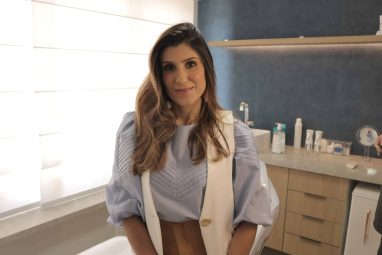

Dr. Renata Ralha, Clinical, Aesthetic and Hair Dermatologist, CRM: 52-84102-1 RJ, RQE No.: 28115
Dr. Renata Ralha, dermatologist, specializing in Clinical and Aesthetic Dermatology, full member of the Brazilian Society of Dermatology (SBD), postgraduate studies in Dermatology and Dermatological Surgery.
-
1) Are cryolipolysis and CoolSculpting the same thing?
CoolSculpting is a brand associated with cryolipolysis, which is a controlled cooling method for localized fat reduction.
-
2) Does CoolFase "remove fat"?
CoolFase focuses on radiofrequency for skin firmness and elasticity, not on direct reduction of localized fat as its primary goal.
-
3) If I want to improve my double chin, which one should I choose?
It depends on the cause: a double chin can be due to fat, sagging skin, or both. Without an evaluation, the chance of targeting the wrong area is high.
-
4) Does cryolipolysis have risks?
Yes. There is a rare event called paradoxical adipose hyperplasia (PAH), described by the FDA as fat growth in the treated area, reported after "fat freezing".
-
5) Is it possible to make a decision based solely on the internet and social media?
It's risky. "Contouring" can refer to skin or fat. An in-person assessment defines the target and avoids frustration.
-
6) Does Dr. Renata perform cryolipolysis?
No. At the clinic, we perform CoolFase and protocols focused on skin quality, collagen, and rejuvenation.
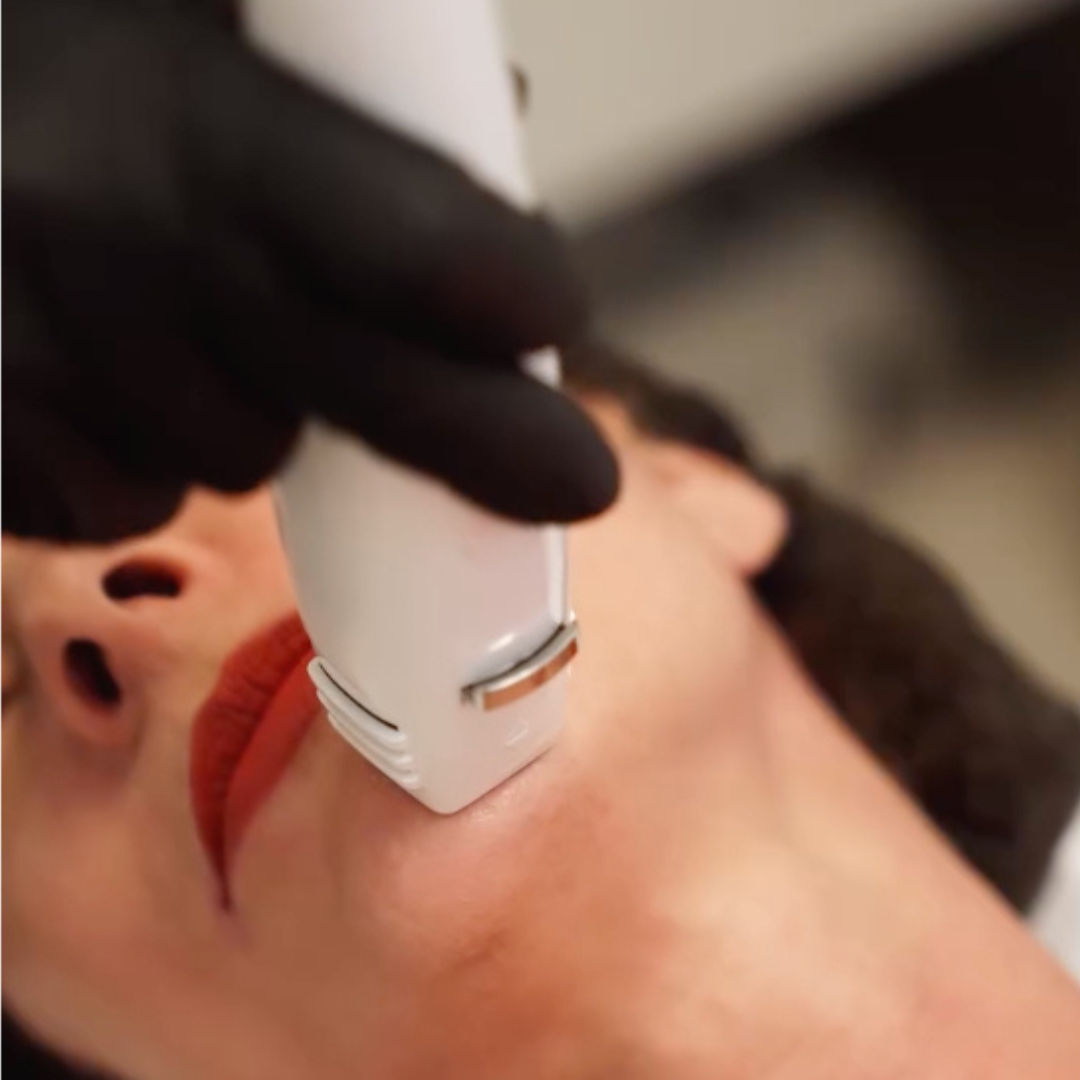
Coolfase – Face
Promotional Price
3.690
6.890
Recommended for treating facial sagging and loss of contour definition, stimulating collagen and elastin. Improves sagging, redefines facial contours, and leaves the skin firmer, denser, and more even.
Values in Reais
Related Posts
- CoolFase or CoolFace? What is it and how does this skin firming technology work? Click here!
- How does the collagen plan change with age? Where does CoolFase come in? Click here!
- Can someone who has already used biostimulators use CoolFase? Click here!
- Ivete Sangalo underwent CoolFase: see the treatment that has become a trend in Brazil and around the world | Click here!
- 4 main benefits of CoolFase for skin firmness and rejuvenation | Click here!
- Does CoolFase alter skin thickness or simply reposition tissues? Click here!
- CoolFase Age in Facial Ligaments: Why Does This Differentiate the Treatment? Click here!
Follow our WhatsApp channel: Dr. Renata Ralha!
This channel is for you to stay up-to-date on the best news about... dermatology, aesthetics and skincareIn addition to finding out about all the new publications, promotions and sweepstakes that we offer at the Renata Ralha Clinic!