If you've ever come across the terms "CoolFase" and "CoolSculpting" and thought, "it must all be the same thing," know that you're not alone. The names are very similar, and the promises we see online often sound alike, leading many people to choose based on the name instead of truly understanding what they need.
The main difference is quite simple, but often goes unnoticed: one deals more with... skin and firmness, while the other focuses on localized fatWhen this distinction becomes clear, the choice becomes much more logical and less confusing.
I'm Dr. Renata Ralha, a dermatologist, and I'm going to explain this to you in a useful and honest way, without getting into the "one is better than the other" debate, because in reality, they are different approaches.
Schedule your personalized evaluation with Dr. Renata!
Table of Contents
Do CoolFase and CoolSculpting do the same thing, or are they different treatments?
Are different treatments, with different objectives.
-
coolsculpting It is a brand strongly associated with cryolipolysis, technology of controlled cooling geared towards localized fat reduction.
-
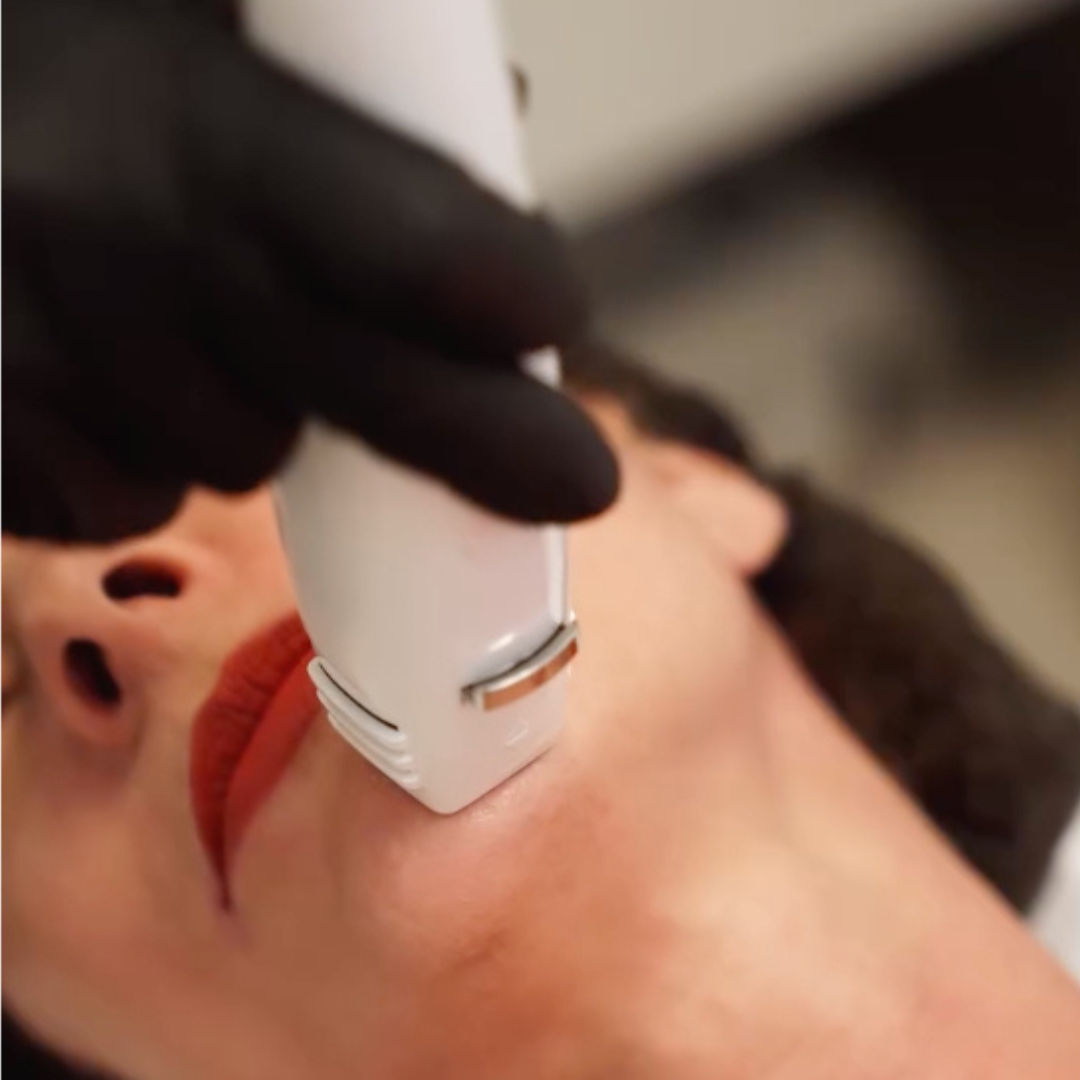
CoolPhase is a device Monopolar radiofrequency with contact cooling, used with a focus on skin quality and improvement of signs such as firmness e mild to moderate saggingdepending on the case and the assessment.
Why are the names so confusing, and what decision-making errors do I see most often?
The most common mistake is trying to resolve a complaint "by way of circumventing" it without separating what is... volume than it is skin.
Three common misconceptions that frequently arise in the doctor's office:
-
People often think that "sagging skin" is always "excess fat".
-
People think that a "double chin" is always fat, when sometimes it's more about skin and support.
-
People choose based on the name's reputation, without a diagnosis: they treat what isn't the root cause and end up frustrated.
What does each one actually address, and what does it not?
A quick way to hit the target is to think like this:
-
If the main problem is localized fatYou are now in cryolipolysis territory.
-
If the main problem is skin quality and firmnessYou are now in the realm of technologies that work on skin and collagen, such as monopolar radiofrequency.
If your complaint is sagging skin, which one comes into play?
When the complaint is sagging skin, the conversation usually revolves around... skinSupport, density, texture, elasticity. This tends to bring the reasoning closer to dermal stimulation technologies, such as monopolar radiofrequency, rather than techniques focused on "reducing fat volume".
Important: Sagging skin has varying degrees and causes. Not all sagging responds in the same way. That's why an evaluation is important.
If your complaint is "volume" (fat), which one makes sense?
If your complaint is a well-defined "pocket" of fat that is resistant to diet and exercise, this is more aligned with the concept of cryolipolysis, which seeks to reduce localized deposits, and not with a procedure designed for skin quality.
How does each technology work in the body, in practice?
What does "monopolar radio frequency with cooling" mean in CoolFase?
Monopolar radiofrequency is a technology that promotes Controlled heating in layers of the skin, with the aim of stimulating dermal remodeling processesincluding collagen.
In the case of CoolFase, the device concept involves contact cooling on the surface to increase comfort and help protect the skin during power delivery.
In practical terms, this relates to: firmness, texture, "more supported skin," within what is realistically possible for each case.
What does "controlled cooling" mean in CoolSculpting cryolipolysis?
Cryolipolysis, also called "fat freezing," uses controlled cold temperatures with the intention of targeting fat cells in a "pinchable" area, reducing the volume of localized adipose tissue.
It is not a comprehensive weight loss treatment and is not indicated for obesity.
What can we expect from each of them, and, more importantly, what can't we expect?
Here's the part that best protects you from wasting energy in the wrong place.
-
CoolPhase It tends to be sought when the priority is skin: firmness, texture, skin quality. It is not a procedure whose main objective is to "get rid of fat".
-
CoolSculpting/cryolipolysis It tends to be sought when the priority is localized fat: reducing a specific volume. By definition, it is not a treatment focused on "skin quality" as the main objective.
What signs suggest you're looking for the wrong solution to the right problem?
Use these signs as a warning:
-
You say "I want to get dry," but what bothers you most is... skin peeling and loss of support.
-
You say "I want to make a deal," but there is a localized volume clearly visible, well defined.
-
You want to "improve your contour," but no one has assessed whether the contour is skin, fat, both, or even anatomical factors.
When does "improving contour" refer to skin (sagging) and not fat?
In general, there is more skin when:
-
What appears is more "drop" than "volume".
-
When you pinch, you feel more skin than fat.
-
The improvement you're looking for is more about "definition" and "finishing" than "size reduction."
None of this replaces evaluation, but it does help prevent impulsive decisions.
How to choose wisely: what questions should you ask yourself before deciding?
I like to break this down into simple questions, because the answer often shows the way.
If your priority is contour and firmness, what should you look for in the mirror and during your consultation?
In the mirror, observe:
-
Does your complaint seem more about "hair loss" than "volume"?
-
Does the area lose definition more due to thin skin and sagging?
-
Do you expect a gradual improvement in quality, rather than a change in measures?
During the consultation, ask:
-
My main complaint is skin, fat, or a combination of both?
-
What clinical sign would make you recommend this technology for me?
-
What could limit my results (degree of sagging, skin quality, habits, history)?
If your priority is to reduce localized fat, what should you look for and what should you ask?
Note:
-
Is there well-defined, "pinchable" fat? (This matters in cryolipolysis)
-
Are you hoping to reduce a specific volume, and not "lose weight"?
Ask:
-
Am I a suitable candidate, or is my case more about sagging skin than fat?
-
What effects are expected and which are not?
-
How does the service handle incidents and follow-up?
Is it possible to combine approaches? In which scenarios is this usually discussed with more confidence?
Yes, in some cases the conversation is precisely about "combination" and "order of the plan." This is common when there are two real components to the same problem.
If I treat fat without taking care of the skin, what might happen to the perception of sagging?
In some people, when reducing volume, the skin may still lack support, and the person becomes more noticeable with sagging. This doesn't mean the treatment "went wrong." It means the plan perhaps should have considered skin and support from the beginning.
If I treat the skin without addressing the fat, what might still be a problem?
If there is a significant amount of localized fat, skin improvement may not solve the problem that bothers you most when you look in the mirror, because the "volume" remains. Again, this is not a flaw in the procedure. It's a matter of targeting the wrong person.
What risks and limitations are often underestimated?
Any serious procedure needs to address limits.
What are the most discussed adverse effects of cryolipolysis (including rare ones)?
In addition to expected local effects, there is a rare complication that is well described in the literature: paradoxical adipose hyperplasia (PAH)This occurs when there is a firm and well-defined increase in adipose tissue in the treated area weeks to months after cryolipolysis.
Rare doesn't mean zero. That's why proper diagnosis and follow-up are important.
What precautions and restrictions are common in controlled heating technologies?
In technologies that generate controlled heat, safety depends on assessment, appropriate parameters, technique, and respect for the patient's limitations. Practical guidance usually involves:
-
Don't make a decision based on internet research without first examining the skin and medical history.
-
align realistic expectations
-
Follow post-care instructions as directed by a professional.
Post-operative details vary depending on the case and protocol.
What constitutes a "good assessment plan" to avoid making the wrong recommendation?
A good assessment plan doesn't begin with the name of the procedure. It begins with diagnosis.
Which signs require an in-person evaluation (and not a decision made online)?
-
A real confusion exists between "fat" and "sagging" in the same area.
-
history of previous procedures in the region
-
significant asymmetries
-
Very specific expectations regarding boundaries and "definition" without clarity about the cause.
If you're confused, that's already a sign that an in-person evaluation is worthwhile.
What combinations and expectations should be aligned before starting?
Before starting, I would align:
-
What is the primary target: skin, fat, or both?
-
what is realistically possible for your degree of sagging or volume
-
Does it make sense to combine them, and in what order, instead of betting everything on a single name?
-
How will the follow-up be conducted, and what signs require a return visit?
- Coolfase: What Does the Skin Look Like After the Procedure? Click here!

Dr. Renata Ralha, Clinical, Aesthetic and Hair Dermatologist, CRM: 52-84102-1 RJ, RQE No.: 28115
Dr. Renata Ralha, dermatologist, specializing in Clinical and Aesthetic Dermatology, full member of the Brazilian Society of Dermatology (SBD), postgraduate studies in Dermatology and Dermatological Surgery.
-
Does CoolFase help you lose weight?
It's not a weight loss procedure. It's more related to skin, firmness, and skin quality.
-
Is CoolSculpting suitable for sagging skin?
It is described as cryolipolysis for localized fat. Sagging skin is a different matter and may require other strategies.
-
Is it possible to decide just by seeing before and after photos online?
It's risky. The same complaint can have different causes. Deciding without evaluation increases the chance of making the wrong recommendation.
-
Does Dr. Renata perform CoolSculpting?
No. The clinic works with CoolFase and planning focused on skin quality and aging management.
Coolfase – Face
Promotional Price
3.690
6.890
Recommended for treating facial sagging and loss of contour definition, stimulating collagen and elastin. Improves sagging, redefines facial contours, and leaves the skin firmer, denser, and more even.
Values in Reais
Related Posts
- CoolFase or CoolFace? What is it and how does this skin firming technology work? Click here!
- How does the collagen plan change with age? Where does CoolFase come in? Click here!
- Can someone who has already used biostimulators use CoolFase? Click here!
- Ivete Sangalo underwent CoolFase: see the treatment that has become a trend in Brazil and around the world | Click here!
- 4 main benefits of CoolFase for skin firmness and rejuvenation | Click here!
- Does CoolFase alter skin thickness or simply reposition tissues? Click here!
- CoolFase Age in Facial Ligaments: Why Does This Differentiate the Treatment? Click here!
Follow our WhatsApp channel: Dr. Renata Ralha!
This channel is for you to stay up-to-date on the best news about... dermatology, aesthetics and skincareIn addition to finding out about all the new publications, promotions and sweepstakes that we offer at the Renata Ralha Clinic!