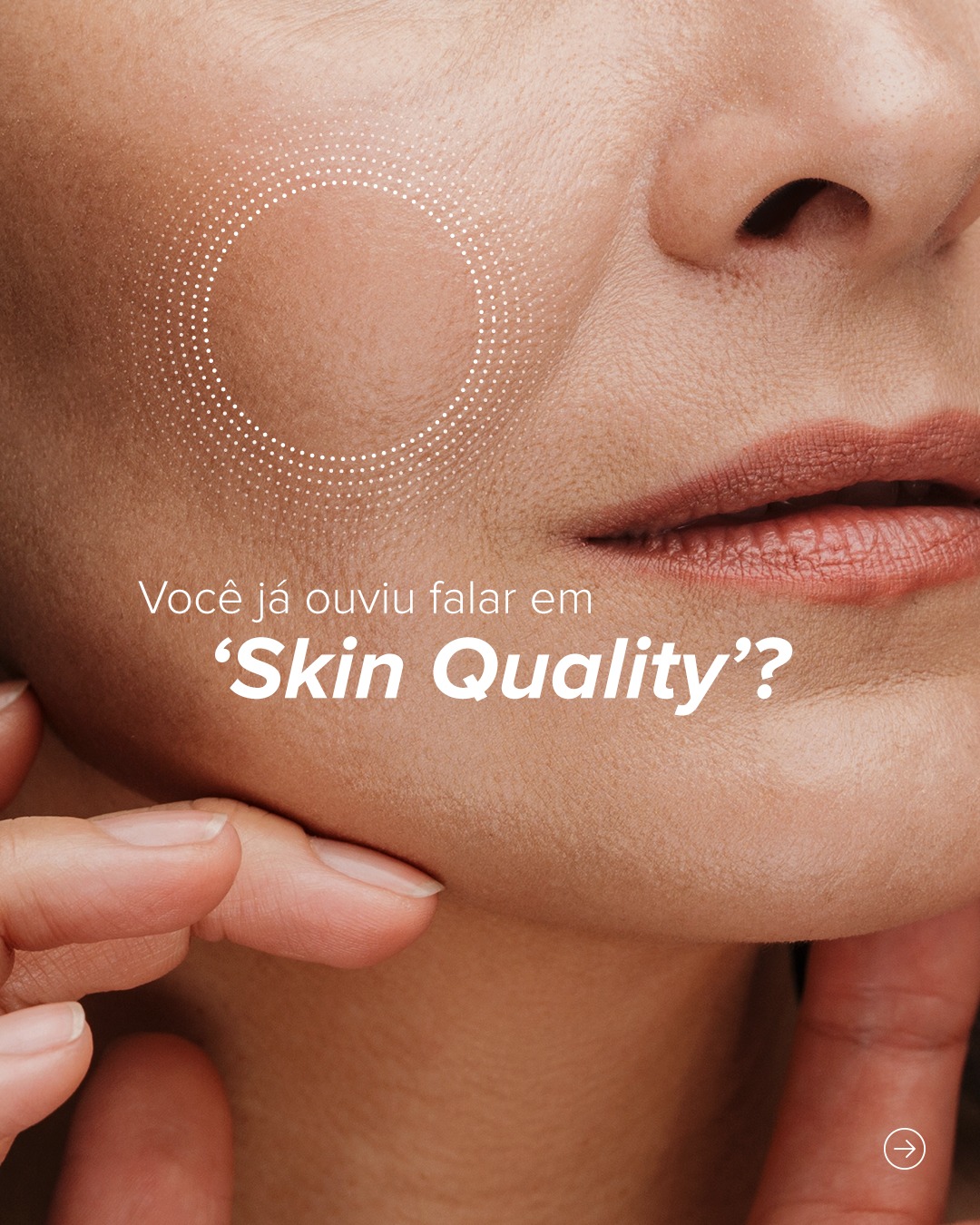
Have you ever wondered why some cosmetic procedures truly transform the skin, while others seem to make no difference?
The answer lies in what happens inside your body.
With aging, the body enters an energy-saving mode, prioritizing vital functions and slowing down processes that previously occurred naturally, such as... production of collagen, elastin and hyaluronic acid.
That's why, over time, skin loses firmness, radiance, and elasticity.
The protocols we recommend at the Renata Ralha Clinic have a clear objective: reactivate that internal collagen factory, making your body work in favor of your skin again.
Nothing is random; every technology has a purpose and a scientific explanation behind it.
Schedule your personalized evaluation with Dr. Renata!
Table of Contents
What happens to the skin over time?
Over the years, the body enters an "energy-saving" mode. It begins to prioritize vital functions and slows down processes considered secondary, such as... cell renewal, collagen production and elastin synthesis, responsible for the firmness and elasticity of the skin.
When we are young, skin cells renew themselves every 28 days. By the age of 40, the cycle lasts about 35 to 45 days; after 50, it can take 60 days or more. This slowness causes the skin to heal more slowly, accumulate dead cells, become duller, and develop blemishes more easily.
Furthermore, the "collagen factory," the fibroblasts, begins to work less. From the age of 30, we lose about... 1% of skin collagen is lost per year....and after menopause, this loss can reach... 30% in just 5 yearsThe result is thinner, sagging, and dull skin.
It double effectsSlower cell renewal and declining collagen production explain why aging skin exhibits blemishes, lack of radiance, wrinkles, and sagging. But there is good news: our body know We can repair this damage by stimulating the right mechanisms!
Why the skin needs stimulation
Why “Provoke” the Skin? The Principle of Wound Healing
Given these changes, how can we... to help the skin renew itself and produce collagen.The answer is in to cause a little controlled “stress” on the skin for activate the natural repair processIn other words, it is the concept of "hurt in order to heal".
The body only begins to regenerate tissue when it perceives that there is something to be repaired. If the skin doesn't present any "urgency," it maintains the slow pace typical of advanced age.
Therefore, modern treatments are designed to to trigger a small, controlled stimuluswhich awakens this natural regenerative capacity: Blood flow increases in the region, and immune cells and growth factors are activated., and the Fibroblasts then spring into action, producing collagen and elastin. new
It's the same principle as wound healing — only in a safe, controlled way and with the goal of... to improve skin firmness and textureDuring the process generated by the procedure, there is a new production of collagen, elastin and hyaluronic acid, restoring firmness, thickness and luminosity to the skin.
How are these stimuli created?
The treatments we recommend at the clinic are designed for activate collagen through different pathways, according to the needs of each patient.
Even though the mechanisms are different — mechanical, thermal, or biological — the goal is the same: reactivate the collagen factory and improve the skin's structure from the inside out.
1. Mechanical stimulation – Microneedling
Techniques of controlled drilling of the skin, such as traditional microneedling with a dermaroller or advanced devices such as the Nanopore (electric microneedling pen), they work by creating microcuts/microperforations on the skin. These microscopic lesions They do not cause significant damage to the epidermis.However, they are sufficient to trigger the biological repair (healing) alarm.
As a result, the body releases growth factors and sends fibroblasts to the area to regenerate the damaged tissue. Studies confirm that... induced microlesions They increase the production and deposition of collagen and elastin. In the dermis, it improves skin firmness and elasticity over time. Additionally, neovascularization (formation of new capillaries) occurs, improving local circulation and nourishing the treated skin.
This procedure improves fine wrinkles, pores, texture, and even acne scars, with quick recovery and progressive results.
2. Thermal stimulation – Laser, microfocused ultrasound and radiofrequency
Another group of treatments uses the controlled heat to awaken regeneration.
Technologies like Fractional laser, microfocused ultrasound (Liftera) e radiofrequency (CoolFase) They generate intense heating at strategic points in the tissue., causing a kind of "microburn" or local thermal coagulation.
Os microscopic thermal damage These signals indicate to the body that the area needs repair. The body then initiates a controlled inflammatory reaction, causing an immediate contraction of the old fibers, removing damaged cells and stimulating fibroblasts to... synthesize new collagen for reconstruction. The result is a Firmer, smoother skin with more defined contours., without the need for cuts or disruption to routine.
It is important to highlight that the intensity of the thermal stimulus can be adjusted: intense ablative lasers cause more dramatic changes (with greater recovery), while non-ablative lasers, RF, and ultrasound offer gradual improvement with minimal downtime. In all cases, however, The basic principle is the same.: Heat = controlled damage = repair with new collagen.
3. Biological stimulation – Biostimulators and Skinboosters
Os collagen biostimulators (as Sculptra®, Radiesse® and Ellansé®) and skinboosters (as Restylane® and Profhilo®They act differently: instead of causing physical harm, they They engage the body biologically. so that he may promote renewal. via immune response.
Biostimulators are biocompatible injectable materials that, when applied to the dermis or subdermis, act as... simulated “foreign bodies”, triggering a Mild, controlled inflammatory reaction. Awakening the fibroblasts, which then produce new collagen and elastin fibers around the injected material.
This process is not instantaneous like that of a traditional filler; it's an improvement. progressive and long-lastingThe clinical outcome is... Thickening of the dermis, improved firmness, and gradual filling of sagging areas or areas with volume loss.In a very natural way. In other words, Biostimulators "reprogram" the skin to function like a young person again., producing more collagen on its own. This is reflected in improved Facial contouring, reduction of fine wrinkles, and denser, more elastic skin. in the months following the series of sessions.
Skinboosters and Profhilo, on the other hand, are focused on... skin quality , acting as a “reservoir” of hydration and a biochemical support networkThis improves the elasticity and smoothness of the skin, giving it that "glowy" look of well-cared-for skin. Patients report skin smoother, brighter and firmerLess visible pores and smoothed fine lines. Results from a combination of super-hydration and mild but consistent collagen stimulation.
In summaryInjectable procedures can both "rebuild from within" (as in the case of biostimulators, which induce firmness and volume via new collagen) as "Boost skin quality" (as is the case with skinboosters, which restore hydration and radiance while promoting some neocollagenesis).
Why do cosmetic treatments work?
None of what we've suggested is "trendy".
Each protocol is chosen because it has solid scientific basis And because it actually activates the skin's natural regeneration mechanisms.
Studies show that:
O microneedling It significantly increases collagen and improves scars and wrinkles;
O fractional laser It stimulates dermal remodeling and skin thickening;
O microfocused ultrasound features more than 80% patient satisfaction and proven improvement in sagging skin;
A radio frequency It causes immediate collagen contraction and stimulates the formation of new fibers;
Os biostimulators They induce the production of type I collagen for up to 24 months;
And the skinboosters They increase the thickness of the dermis and improve the skin's actual elasticity.
These results show that when we recommend a protocol, it has a purpose: to reactivate functions that the body already has, but which need a boost to start working in favor of your skin again..
Conclusion: Confidence in Results and the Value of Knowledge
For patients who are still wondering "But does this procedure really work?", the answer is: Yes, it works – and there's a logical, scientific explanation for it.. Understand the why The benefits of aesthetic treatments increase confidence and adherence. After all, it's not magic or just cosmetics: It's applied biology.. We're positively deceiving the body, simulating microdamage to activate their natural regenerative powers.
Therefore, when we recommend microneedling, microfocused ultrasound, radiofrequency, lasers, biostimulators or skinboostersWe will be equipped with the knowledge to explain:
“We induce a slight stress to force your body to repair itself, and in doing so, it creates new collagen. This will firm your skin and improve its texture because we will literally be regenerating tissue.”
This understanding creates value. The patient realizes that it's not just a random cosmetic treatment – There is a medical and scientific basis for it, and a clear mechanism of action.This also reinforces the importance of having procedures performed by qualified professionals. Knowing how to apply the right amount of "stress" to the skin is both an art and a science., to stimulate without causing unwanted harm.
In short, Aging is natural, but we can outsmart nature with intelligence.Using technology and knowledge, We give the body a little push to help it do what it did so well in its youth.To renew, heal, and beautify the skin. The result is more informed, confident, and satisfied patients – because they understand that what we recommend... It makes sense, it has evidence, and it seeks to achieve exactly the expected result.Healthier, firmer, and more radiant skin, regardless of age.

Medical evaluation is essential to understand the patient's complaints, identify dermatological problems, and consider their individual characteristics, such as anatomy, skin type, and reactions to substances used. Based on this, it is possible to determine the appropriate techniques to naturally enhance the features of the face, skin, and body.
Choosing a dermatologist is crucial for a thorough analysis of the areas of disharmony in the patient and to determine the necessary techniques, whether it be increasing volume, correcting angles, or symmetry. With a personalized and exclusive treatment plan, it is possible to meet the specific needs of each patient while respecting their limitations.
Dr. Renata Ralha, Clinical, Aesthetic and Hair Dermatologist, CRM: 52-84102-1 RJ, RQE No.: 28115
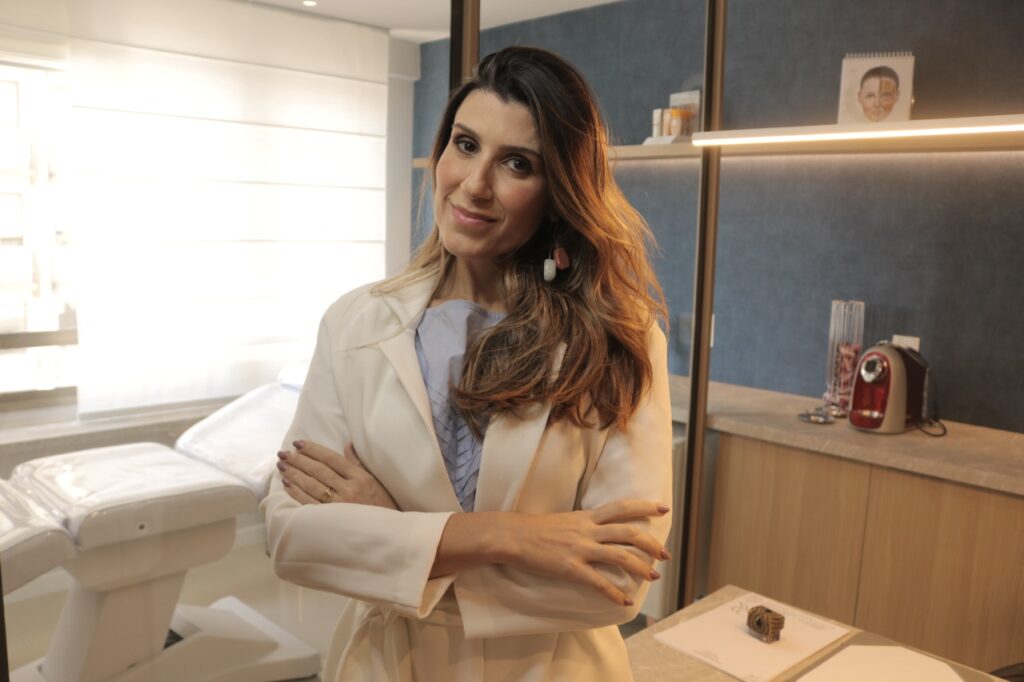

Dr. Renata Ralha, Clinical, Aesthetic and Hair Dermatologist, CRM: 52-84102-1 RJ, RQE No.: 28115
Follow our WhatsApp channel: Dr. Renata Ralha!
This channel is for you to stay up-to-date on the best news about... dermatology, aesthetics and skincareIn addition to finding out about all the new publications, promotions and sweepstakes that we offer at the Renata Ralha Clinic!
-
How long does it take to see results from each procedure?
CoolFase: 60–90 days; Liftera: 3–6 months; biostimulators: 4–6 months; Skinbooster: weeks.
-
Can I combine these procedures?
Yes. They are often complementary, but the choice depends on a dermatological evaluation.
-
Where can I get these treatments in Rio de Janeiro?
Na Renata Ralha Clinic, a leading center for aesthetic dermatology, located in the Nova América Offices Shopping Mall.
-
What sets the Renata Ralha Clinic apart?
Expertise of Dr. Renata RalhaPersonalized protocols, cutting-edge technology, and humanized care.