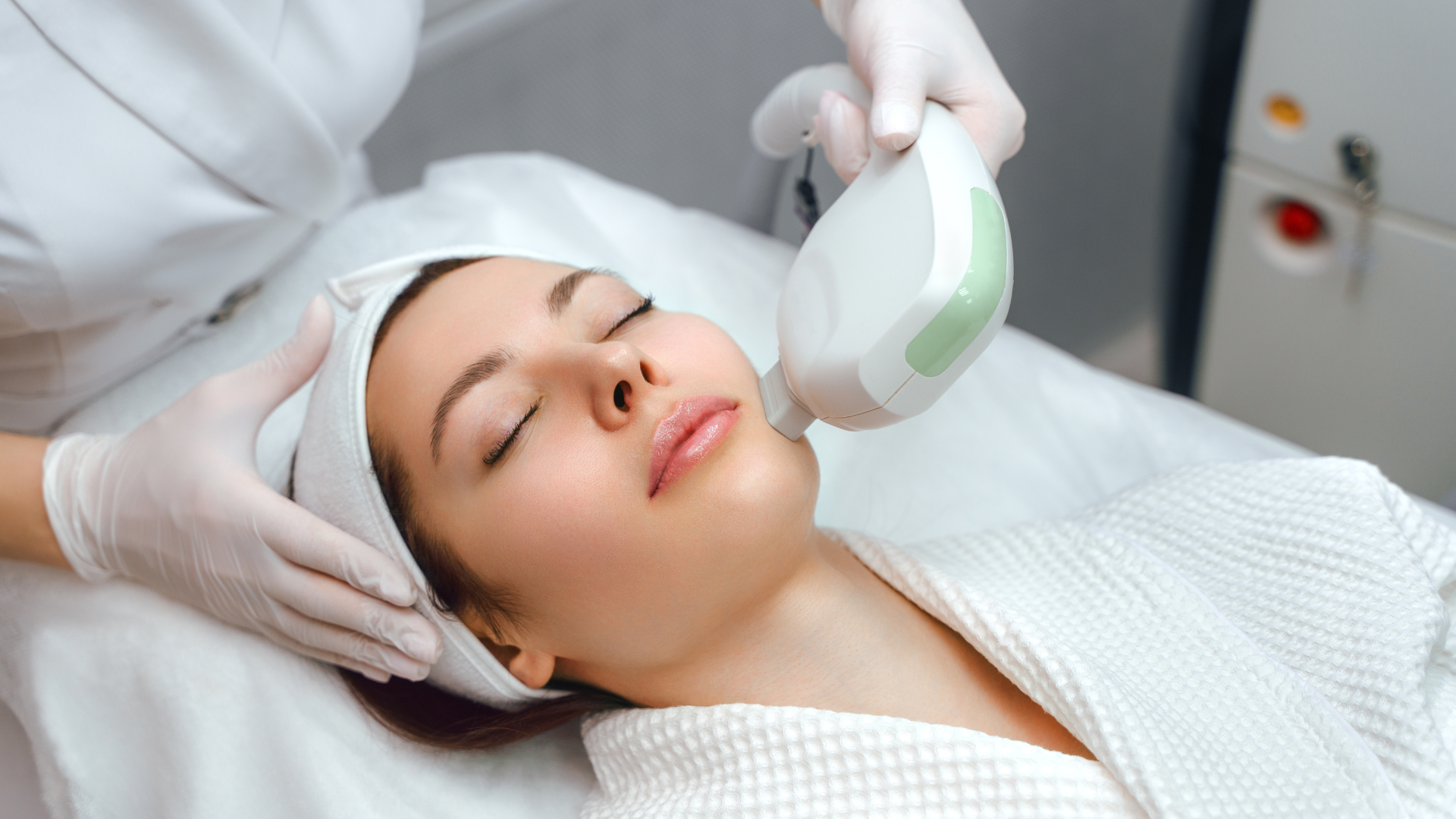
If you're planning a trip to Rio de Janeiro and have searched for "HIFU," "Ultherapy," or "non-surgical facelift," this guide is for you. HIFU (high-intensity focused ultrasound) is currently one of the most sought-after facial firming treatments by international visitors to Brazil—for a practical reason: it's performed in a single session, without incisions or downtime, making it compatible with a short stay in the city. In this article, Dr. Renata Ralha, a dermatologist in Rio de Janeiro, explains what HIFU is, the difference between the available technologies, how to prepare for the session during a trip, and what precautions to take regarding the Rio sun after the procedure.
Schedule your personalized evaluation with Dr. Renata!
What is HIFU and how does it work?
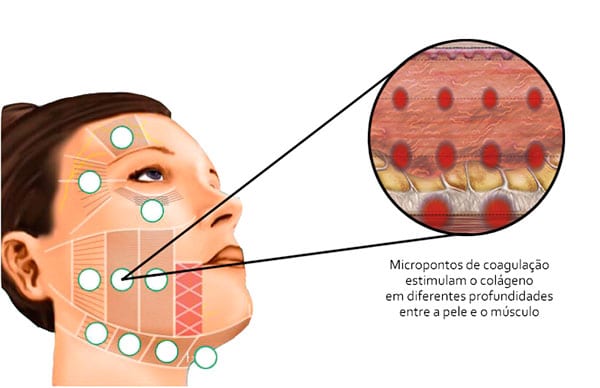
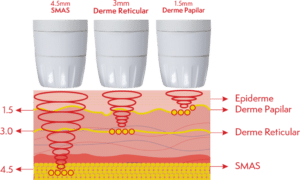
HIFU stands for High-Intensity Focused Ultrasound. It's a rejuvenation technology that treats sagging skin without surgery: the device emits ultrasound waves that penetrate the skin's surface without damaging it and concentrate energy on precise points in the deeper layers, including the SMAS layer—the same structure that a plastic surgeon repositions in a surgical facelift. This controlled heating causes immediate contraction of the fibers and stimulates the production of new collagen over the following months. The result is a lifting and firming effect that develops gradually and naturally, generally between 60 and 90 days after the session, without the skin being cut or punctured.
HIFU, Ultherapy, and Liftera: what's the difference between the names?
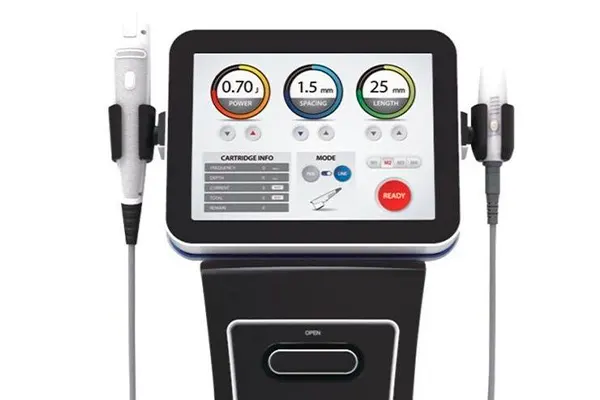
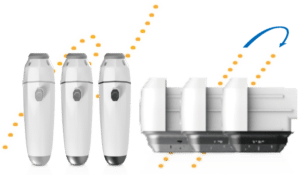
Ultherapy and Liftera are brands of devices; HIFU is the name of the technology they both use. Ultherapy was the pioneer in the category and became the best-known name in the United States—many patients search for the brand without knowing it's a microfocused ultrasound. Liftera belongs to the most recent generation of this same technological category and has brought significant improvements to patient comfort: gliding application, faster sessions, and less reported pain, while maintaining the same principle of action in the deeper layers of the skin. In our clinic, we use Liftera, a device registered with ANVISA (the Brazilian health regulatory agency, equivalent to the American FDA and the European EMA). If you knew the treatment by the name Ultherapy, know that you are researching the right category—and that you will find the most current generation of it in Rio.
Why do international patients choose Rio de Janeiro for HIFU?
Brazil is one of the largest dermatology and aesthetic medicine markets in the world, and Brazilian dermatologists are among those who perform the most technologically advanced procedures on the planet—a volume that translates into practical experience. Furthermore, for those who earn in dollars, euros, or pounds, the prices charged in Brazil are usually significantly lower than those of equivalent clinics in New York, London, or Zurich, without sacrificing registered equipment and specialist doctors. In the case of our clinic, there are two key differentiators for visitors: fully available service in English (consultation, guidance, and post-procedure care) and a publicly verifiable reputation—we are the highest-rated dermatology clinic in Rio de Janeiro on Google, with a top score built on hundreds of reviews from real patients.
What is a HIFU session like — and why is it ideal for travelers?
A HIFU session lasts between 45 and 90 minutes, is performed in the office, and does not require hospitalization, general anesthesia, or rest. The skin may be slightly red or sensitive for a few hours, and it is possible to resume activities—including sightseeing—on the same day. Unlike treatments that require several sessions over months (such as some biostimulator or fractional laser protocols), HIFU is typically performed in a single session, with annual maintenance. This characteristic makes it the preferred procedure for those visiting Rio for one or two weeks: you have the session at the beginning of your trip, enjoy the city normally, and the collagen works in the following months, back in your home country.
The step-by-step process for international patients at our clinic.
Our protocol for those living outside of Brazil is designed to fit within your travel timeframe. First, we conduct a teleconsultation in English or Portuguese before your departure: the dermatologist evaluates your photos and history, confirms if you are a candidate for HIFU, and reserves the session date. Second, the session is preferably scheduled within the first few days of your stay, leaving room for an in-person reassessment before your return flight, if necessary. Third, follow-up continues remotely: you receive written instructions in your language and maintain direct communication with the team via telemedicine after returning to your country. It's the same journey pattern that has established Brazil as a health tourism destination — remote planning, focused execution, and continuous follow-up.
Sun, beach, and post-procedure care: the precautions to take in Rio de Janeiro.
This is the number one question for those undergoing procedures while traveling to Rio — and the answer is reassuring. Because HIFU acts on the deeper layers without breaking the skin's surface, there are no open wounds or intense peeling. The aftercare is simple: reapply SPF 50 sunscreen throughout the day, wear a hat or cap during periods of strong sun, and avoid prolonged direct sun exposure for the first week. Beach outings and outdoor activities are not prohibited — they only require the same sun protection discipline we already recommend to any patient during the Rio summer. During the consultation, we provide a skincare plan adapted to your travel itinerary.
Who is a candidate for HIFU — and who isn't?
HIFU is indicated for men and women, generally from the age of 30, with mild to moderate sagging in the face, neck, or jawline, who seek firmness with natural results and without surgery. It is not the appropriate treatment for very pronounced sagging (cases in which surgery may be the best option), for pregnant women, nor for people with active infections or certain skin conditions in the treated area. Therefore, a prior medical evaluation—in person or via teleconsultation—is not a formality: it is what determines whether HIFU is the right choice for your case or whether another technology will bring more benefit. Results vary from person to person, and no serious procedure promises guaranteed results.
About the author
Dr. Renata Ralha is a dermatologist in Rio de Janeiro, leading the Renata Ralha Clinic, which combines clinical dermatology, rejuvenation technologies, and aesthetic gynecology. The clinic serves international patients in English, offers pre- and post-travel teleconsultations, and is the highest-rated dermatology clinic in Rio de Janeiro on Google, with a 5,0 rating and over 700 public patient reviews.
By Dr. Renata Ralha — Dermatologist | CRM-RJ [insert] | RQE [insert]. Educational content; does not replace medical consultation.
What is HIFU used for?
Aesthetic Applications:
The Liftera, a HIFU technology, is indicated for facial lifting, wrinkle and expression line reduction, treatment of body sagging, and rejuvenation of intimate areas. It is also effective in defining facial contours and treating double chins.
What does HIFU do to the face?
Facial Benefits:
On the face, Liftera improves skin firmness and elasticity, softens wrinkles and expression lines, redefines facial contours, and provides a non-invasive bichectomy effect. The treatment results in younger-looking, radiant skin.
Bonus | Why is Liftera better than Ultraformer?
Advanced Technology:
Liftera uses advanced micro-focused ultrasound technology, providing a more precise and less invasive treatment.
Why is Liftera better than Ultraformer?
Compared to Ultraformer, Liftera causes less pain and swelling, resulting in a faster and more comfortable recovery.
Consistent Results:
Liftera offers more consistent and natural results, with a lower chance of adverse effects.


Medical evaluation is essential to understand the patient's complaints, identify dermatological problems, and consider their individual characteristics, such as anatomy, skin type, and reactions to substances used. Based on this, it is possible to determine the appropriate techniques to naturally enhance the features of the face, skin, and body.
Choosing a dermatologist is crucial for a thorough analysis of the areas of disharmony in the patient and to determine the necessary techniques, whether it be increasing volume, correcting angles, or symmetry. With a personalized and exclusive treatment plan, it is possible to meet the specific needs of each patient while respecting their limitations.
Dr. Renata Ralha, Clinical, Aesthetic and Hair Dermatologist, CRM: 52-84102-1 RJ, RQE No.: 28115


Dr. Renata Ralha, Clinical, Aesthetic and Hair Dermatologist, CRM: 52-84102-1 RJ, RQE No.: 28115
Follow our WhatsApp channel: Dr. Renata Ralha!
This channel is for you to stay up-to-date on the best news about... dermatology, aesthetics and skincareIn addition to finding out about all the new publications, promotions and sweepstakes that we offer at the Renata Ralha Clinic!
The sensation is of sharp heat during the injections, considered tolerable by most patients. Newer generation devices, such as Liftera, were developed to reduce discomfort, and the application is adjusted to your sensitivity.
Stimulated collagen develops over 2 to 3 months, and the effects typically last around 12 to 18 months, varying according to age, skin quality, and lifestyle habits. Annual maintenance is the most common recommendation.
Direct and prolonged sun exposure should be avoided during the first week, but outdoor activities with SPF 50 sunscreen and physical protection are permitted. There is no open wound.
Yes. HIFU does not impose any flight restrictions, making it suitable for those passing through the city.
No. The session is outpatient and you leave the clinic ready to continue your travel itinerary on the same day.
Through our WhatsApp. The first step is a teleconsultation in English or Portuguese, conducted before your trip, for assessment and to reserve the date of the session.