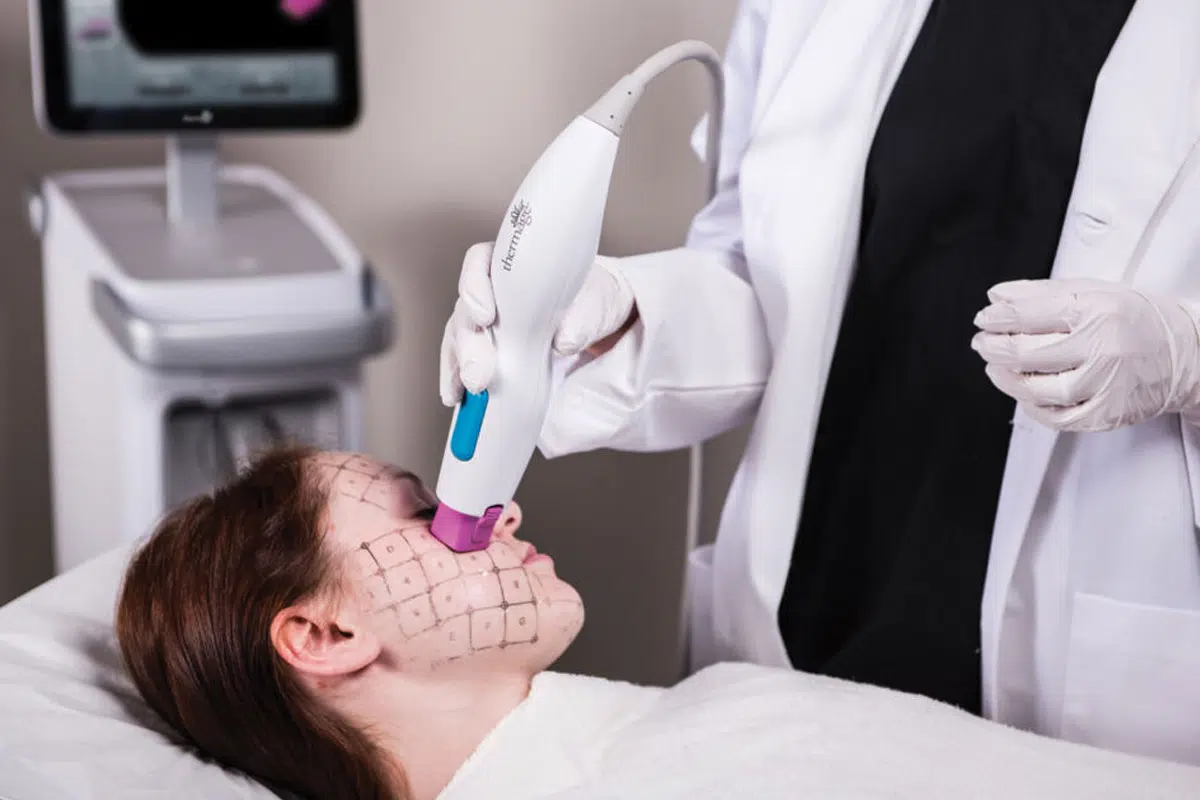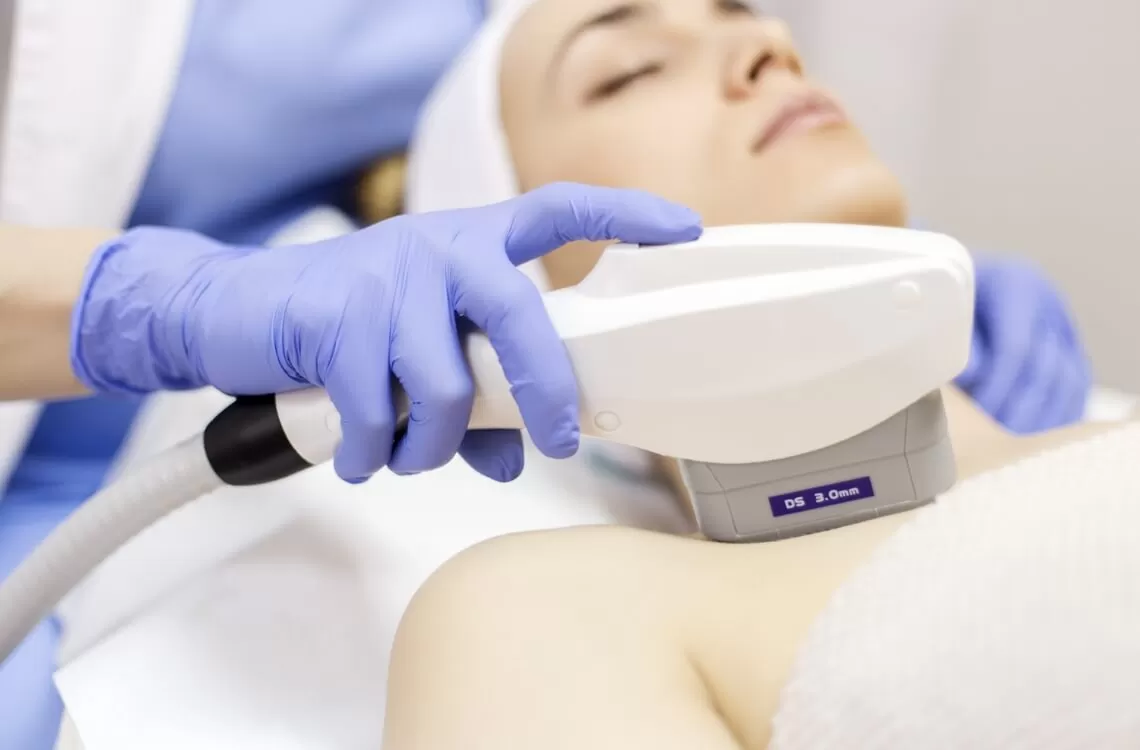
The Ignite Quantum RF is a radio frequency probe. minimally invasive, made for soft tissue contraction and remodeling. Made with small incisions in the skin and using a cannula., designed to contract the skin in deep planesIt usually makes more sense. along with surgeries like liposuctionThis is a good option when there is a risk of sagging skin after fat removal. If you want to treat sagging skin without surgery and without recovery time, it's probably not the first choice.
Schedule your personalized evaluation with Dr. Renata!
Dermatologist at Nova América
What is Quantum RF?
O Quantum RF It is a treatment of minimally invasive radiofrequency, done with skin incisions and use of cannulas, with the aim of contract the skin in deep planes.
It is not a superficial procedure, nor is it done only "on the outside of the skin." It is a technology designed to act. beneath the skin, directly into the subdermal tissue, promoting thermal contraction.
Therefore, it does not fall into the same category as non-invasive treatments for sagging skin.
- What is the difference between CoolFase and CoolSculpting? Understand what each one treats and how to make the right choice. Click here!
- Technologies that Support Mature Skin: Ultrasound, Radiofrequency, and Biostimulators | Click here!
How does this radiofrequency work in practice?
Quantum RF:
-
requires small incisions in the skin
-
uses specific cannulas to conduct radiofrequency
-
acts in deep plansbeneath the skin
-
It is considered minimally invasive, but still invasive
In practice, the procedure involves:
-
local anesthesia (or combined with other procedures)
-
subcutaneous manipulation
-
Edema and recovery consistent with invasive procedures.
What technology is this inside Ignite?
Quantum RF is part of the platform IgniteRF da InMode.
He uses pulsed bipolar radiofrequency, applied using specific cannulas (such as RF10 and RF25), designed for:
-
generate controlled heating
-
induce tissue contraction
-
stimulate remodeling over time
The focus of the technology is not skin texture, but rather deep soft tissue contraction.
- Before and After Photos | Liftera, Coolfase, Biostimulator, Profhilo, Skinbooster | Click here!
- Everything About Monopolar Radiofrequency: How it Works, Benefits and Indications | Click here!
For what types of situations is Quantum RF typically recommended?
In clinical practice, Quantum RF It is rarely the sole first choice..
It is usually most suitable when:
-
the patient He's going to have surgery soon., such as liposuction
-
there is a risk of residual sagging after fat removal
-
there is a need for contract the skin from the inside
-
The context already involves a surgical environment and recovery.
Therefore, Quantum RF is commonly associated with:
-
liposuction
-
surgical body procedures
-
post-surgical skin retraction strategies
He enters as a complementnot as a primary solution for mild sagging.
When Quantum RF is NOT usually the best choice.
This point is essential for aligning expectations.
Quantum RF generally It's not ideal. When:
-
The person wants to treat sagging skin without surgery.
-
The goal is to avoid incisions, cannulas, and recovery time.
-
The sagging is mild to moderate.
-
The patient is looking for something that allows them to immediately return to their routine.
In these cases, non-invasive technologies tend to be more suitable for the patient's profile.
- What is the difference between microfocused ultrasound treatments: Liftera 2 or Ultraformer? Click here!
- Thread lifts on the face: are they worth it? Risks, limitations, and modern alternatives | Click here!
A common mistake: comparing Quantum RF with non-invasive treatments.
Comparing Quantum RF with external radio frequencies leads to confusion.
In practice:
-
Quantum RF = invasive, subcutaneous, associated with surgery.
-
Non-invasive treatments = external, without incisions, without cannulas.
It's not a question of "which is better," but rather For whom does each one make sense?.
Many patients become frustrated because they are looking for simple skin tightening treatments and end up discovering a technology designed for a completely different context.
Comparison: QuantumRF (Ignite) vs Coolfase
This comparison only makes sense when the patient understands. how each technology acts on the body.
O Quantum RF (Ignite) It is a procedure. minimally invasive, done with Cuts in the skin and use of cannulas, indicated primarily in surgical contextsuch as during or after liposuction, when there is a need for contract the skin from the insideIt requires anesthesia, recovery planning, and acceptance of an invasive procedure.
O Coolfase, on the other hand, is a radiofrequency completely non-invasive, applied through the skinNo cuts, no needles, and no cannulas. Thermal energy acts in a controlled manner on the deeper layers, while the cooling system maintains comfort during application.
In clinical practice, this difference changes everything:
-
Quantum RF: designed for those who He is already in the surgical environment.
-
Coolfase: designed for those who want Treat sagging skin without surgery.
For the vast majority of people seeking to improve sagging skin, definition, and firmness. without disrupting the routine, Coolfase is usually the most coherent option.It delivers collagen stimulation and gradual improvement in firmness without exposing the patient to the risks and recovery of an invasive procedure.
The common mistake is thinking that Quantum RF is "stronger". It's just... more invasive It is indicated for a different scenario. When the complaint is mild to moderate sagging and the goal is safety, comfort, and an immediate return to routine, Coolfase tends to be a better fit.
As always, the right choice depends on individual assessment, which determines whether there is a real indication for a surgical approach or whether a non-invasive technology would be a more effective solution.
About Dr. Renata Ralha
Dr. Renata works with aesthetic assessments focused on sagging skin and body contouring, and observes in her practice that a large portion of patients do not seek invasive solutions. In practice, Quantum RF appears as a useful tool mainly when surgical intervention is already indicated, such as liposuction, and not as an isolated treatment for everyday sagging skin.
Conclusion
Ultimately, Quantum RF isn't a "wrong" technology. It's just... specificWhen used in the correct context—usually associated with surgeries like liposuction—it can help with skin tightening. Outside of that context, it's often more than necessary for most people. Individual assessment is what prevents misaligned choices and unrealistic expectations.


Dr. Renata Ralha, Clinical, Aesthetic and Hair Dermatologist, CRM: 52-84102-1 RJ, RQE No.: 28115
Dr. Renata Ralha, dermatologist, specializing in Clinical and Aesthetic Dermatology, full member of the Brazilian Society of Dermatology (SBD), postgraduate studies in Dermatology and Dermatological Surgery.
-
Is Quantum RF surgery?
It's not a classic surgery, but it is an invasive procedure, done with incisions and a cannula.
-
Is there a way to recover?
Yes. There is swelling, tenderness, and a variable recovery period.
-
Is it suitable for mild sagging skin?
It's generally not the best choice for isolated cases of mild sagging.
-
Can it be done on your own, without surgery?
It can be used, but in practice it is more suitable as a complementary treatment in a surgical setting.
-
Who decides if it's right for me?
An individual medical evaluation will determine if your complaint truly requires an invasive procedure.
-
If I want minimal recovery, which one tends to be a better fit.
In general, non-invasive technologies with cooling and rapid recovery, such as Coolfase, tend to be a better fit for this profile. However, the choice depends on the skin type and the degree of sagging.
Follow our WhatsApp channel: Dr. Renata Ralha!
This channel is for you to stay up-to-date on the best news about... dermatology, aesthetics and skincareIn addition to finding out about all the new publications, promotions and sweepstakes that we offer at the Renata Ralha Clinic!