
At 63, Xuxa returned to the big stage with the tour "The Last Flight of the Spaceship".The premiere took place on July 25, 2026, in São Paulo, in front of a sold-out stadium. The image of a mature, active woman once again occupying a large stage opens up a conversation that goes beyond appearances: How to age without losing vitality, identity, or prominence?
Xuxa has spoken publicly about the freedom she experiences after menopause and, more recently, about the changes she sees in the mirror, the value she places on her own wrinkles, and the social difficulty of accepting female aging. This allows her to address skin health with respect. without speculating on which procedures she underwent or failed to undergo.
Schedule your personalized evaluation with Dr. Renata!
Dermatologist at Nova América
What changes occur in the skin after menopause?
| Doubt | direct answer |
|---|---|
| Does skin lose collagen? | Yes. The loss tends to accelerate in the first years of menopause. |
| Could the skin become drier? | Yes. Reduced oiliness and water retention weaken the skin barrier. |
| Does skincare solve sagging skin? | It aids in hydration, protection, and renewal, but has limited action on deeper structures. |
| Is it possible to stimulate collagen? | Yes. Cosmetics and procedures can be evaluated as needed. |
| Do we need to erase all wrinkles? | No. The modern goal is to preserve quality, expression, and naturalness. |
- Isabella Santoni at 31: Before and After, and what does she do to take care of her face? Click here!
How does Xuxa represent a new image of female aging?
Xuxa doesn't need to look 30 years old to continue being recognized as a beautiful, active, and relevant woman. His return to the stage at age 63 shows that maturity and vitality are not opposing ideas.
For decades, well-known women were pressured not to age and criticized when signs of aging appeared. A healthier approach recognizes that skincare can be part of well-being, but shouldn't require a woman to hide her age or maintain the same face she had decades ago.
In Dr. Renata Ralha's practice, dermatological care does not seek to erase the history of the face. It seeks to improve skin quality, firmness, radiance and balance., preserving movements, expressions and personal characteristics.
Why does skin change so much after menopause?
Reduced estrogen levels directly affect the structure and function of the skin. This hormone is involved in collagen production, elasticity, skin thickness, water retention, and the activity of the glands responsible for oil production.
According to the American Academy of Dermatology, women's skin can lose approximately 30% of your collagen is lost during the first five years of menopause.After this period, the reduction continues more gradually. Therefore, many women notice relatively quick changes in their face, neck, chest, and hands.
Menopause is not the only cause of aging. Accumulated sun exposure, genetics, smoking, weight changes, sleep quality, diet, and previous skincare also influence how the skin reaches this stage.
What changes can appear on the face after 50?
It is common to notice Dryness, increased sensitivity, more noticeable wrinkles, reduced elasticity, and loss of firmness.The skin can also become thinner and lose water more easily, making it less tolerant of harsh cosmetics or excessive routines.
In addition to the skin, other structures continue to age. There may be loss or redistribution of facial fat, reduced support, changes in jawline contour, and deepening of certain depressions. This explains why a moisturizer can improve the feel and superficial appearance, but it doesn't reposition tissues or recover structural loss.
The most frequent changes include:
- dry or rough skin;
- More visible wrinkles and lines;
- facial and neck sagging;
- loss of jaw definition;
- spots and uneven color;
- more visible pores and texture;
- loss of vitality;
- increased sensitivity to acids and retinoids.
Not all women experience these changes with the same intensity. Chronological age and skin age are not exactly the same thing.
Is skincare sufficient to care for skin during menopause?
Skincare is essential, but it has its limits. A well-chosen routine helps protect the skin barrier, reduce dryness, control blemishes, improve texture, and prevent some of the damage caused by solar radiation.
In most cases, the basis of care includes:
- Gentle cleaningwithout excessively removing the skin's natural protection;
- suitable moisturizer, especially with components that support the barrier;
- daily sunscreen;
- Targeted products for blemishes, texture, or lines, according to tolerance;
- Reduce the use of products that cause burning, peeling, or persistent inflammation.
Retinoids, antioxidants, and other active ingredients can be helpful, but they shouldn't be started simply because they appear in videos or product lists for menopause. More sensitive skin may need more specialized care first. Barrier restoration and gradual introduction of treatments.
When the main complaint is sagging, loss of support, or significant changes in contour, cosmetics cannot reach all the affected layers. In this situation, dermatological procedures can be considered as a complement—and not as a substitute—for daily skincare.
What is Skin Longevity after menopause?
Skin Longevity is a long-term strategy to preserve the health, resilience, and renewal capacity of the skin. Instead of waiting for all the changes to become intense, monitoring identifies priorities and intervenes progressively.
After menopause, this approach can have four main objectives:
- preserve and stimulate collagen;
- recover hydration and skin barrier;
- Treat blemishes, texture, and shine;
- To improve firmness and contour without creating a standardized face.
The focus isn't on hiding age. It's on making the skin age naturally. more quality, balance and naturalnessSome wrinkles can be softened; others may remain as part of the patient's expression and history.
What treatments can be considered after menopause?
The choice depends on what predominates in each face. Sagging skin, loss of volume, expression lines, blemishes, and dryness are not the same problem. and therefore should not receive the same treatment.
| Treatment | How can you help? |
|---|---|
| Liftera 2 | It uses microfocused ultrasound to stimulate collagen in deep layers and improve firmness and contour. |
| CoolPhase | It uses monopolar radiofrequency with cooling to treat density and sagging without adding volume. |
| Sculptra and Radiesse | Biostimulators that promote the gradual production of collagen and improve support. |
| Etherea MX lasers and pulsed light | They can treat blemishes, blood vessels, pores, uneven texture, and stimulate collagen production. |
| Botulinum toxin | It softens wrinkles caused by muscle movement, preserving facial expression when used in the correct dosage. |
| Hyaluronic acid filler | Restores support or volume to selected areas without needing to fill the entire face. |
| Profhilo and Skinbooster | They can improve hydration, elasticity, fine lines, and overall skin quality. |
At Dra. Renata Ralha's Clinic, these resources are selected according to the life stage, anatomy, and goals of each patient. Protocols are not standardized and may combine technologies and injectables when each step has a clear function.
Do Liftera 2 and CoolFase do the same thing?
No. O Liftera 2 uses micro-focused ultrasound., while the CoolFase uses monopolar radiofrequency.Technologies deliver energy in different ways and can operate at different depths and to meet different needs.
In some patients, a single technology is sufficient. In others, a combination may be considered to address different aspects of sagging. The choice depends on tissue thickness, contour, degree of firmness loss, and individual response.
How does Dr. Renata Ralha care for her skin after menopause?
A Dr. Renata Ralha is a dermatologist with a Specialist Title from the Brazilian Society of Dermatology., with training in Clinical, Aesthetic and Surgical Dermatology. She personally conducts assessments and procedures, paying attention to safety, naturalness and the history of each patient.
During the consultation, Dr. Renata doesn't just look at wrinkles. She assesses:
- skin quality and thickness;
- degree and distribution of sagging;
- muscle movement;
- loss of support or volume;
- stains and texture;
- skin sensitivity and barrier;
- previous procedures;
- Hormonal changes, routine, and expectations.
Based on this analysis, a protocol can be created that combines skincare, technologies, and injectables — or just home care, when that is sufficient.
For Dr. Renata, Taking care of your skin after 50 doesn't mean trying to go back to being 30.This means recognizing the changes of this phase and choosing proportionate interventions that allow the woman to continue to recognize herself.
Conclusion
At 63, Xuxa shows that aging can mean continuing to occupy spaces, creating projects, and living new phases with freedom. Her presence on stage also helps shift the conversation away from the obligation to "look young" towards a broader idea of vitality and self-care.
Menopause truly alters collagen, hydration, thickness, and firmness of the skin. Skincare, sun protection, and consistent habits are essential, but they aren't always enough to treat deep-seated changes.
When indicated, technologies, biostimulators, lasers, botulinum toxin, and targeted fillers can be part of a treatment plan. Skin LongevityThe goal is not to eliminate all wrinkles, but to care for the skin with science, safety, and respect for each woman's individuality.
Collagen loss tends to accelerate in the early years, which can make changes in firmness and texture more noticeable. Sun exposure, genetics, and lifestyle also play a role in this process.
No. Dryness, sensitivity, and changes in firmness can begin during the perimenopause, the transition period that precedes the last menstruation.
Yes, in many cases it is possible to improve. The answer depends on the degree of sagging, skin quality, and the technique chosen. The goal is a proportional improvement, not a promise that the skin will return to its previous state.
Many people can use it, but the skin may be drier or more sensitive. The concentration, frequency, and combinations should be adjusted to avoid persistent irritation.
No. A well-planned protocol can start with a single priority. The skin needs time to respond, and performing more treatments does not guarantee a better result.
Dr. Renata's proposal aims precisely to avoid this effect. Technologies and biostimulators can improve firmness without adding volume, while fillers are only used when there is a structural need.
The frequency depends on the skin condition, the products used, and the procedures performed. Follow-up appointments are used to monitor the response and decide whether treatment, adjustments, or simply maintenance are necessary.
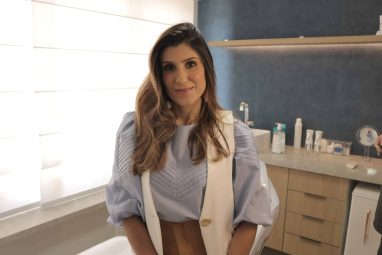

Medical evaluation is essential to understand the patient's complaints, identify dermatological problems, and consider their individual characteristics, such as anatomy, skin type, and reactions to substances used. Based on this, it is possible to determine the appropriate techniques to naturally enhance the features of the face, skin, and body.
Choosing a dermatologist is crucial for a thorough analysis of the areas of disharmony in the patient and to determine the necessary techniques, whether it be increasing volume, correcting angles, or symmetry. With a personalized and exclusive treatment plan, it is possible to meet the specific needs of each patient while respecting their limitations.
Dr. Renata Ralha, Clinical, Aesthetic and Hair Dermatologist, CRM: 52-84102-1 RJ, RQE No.: 28115
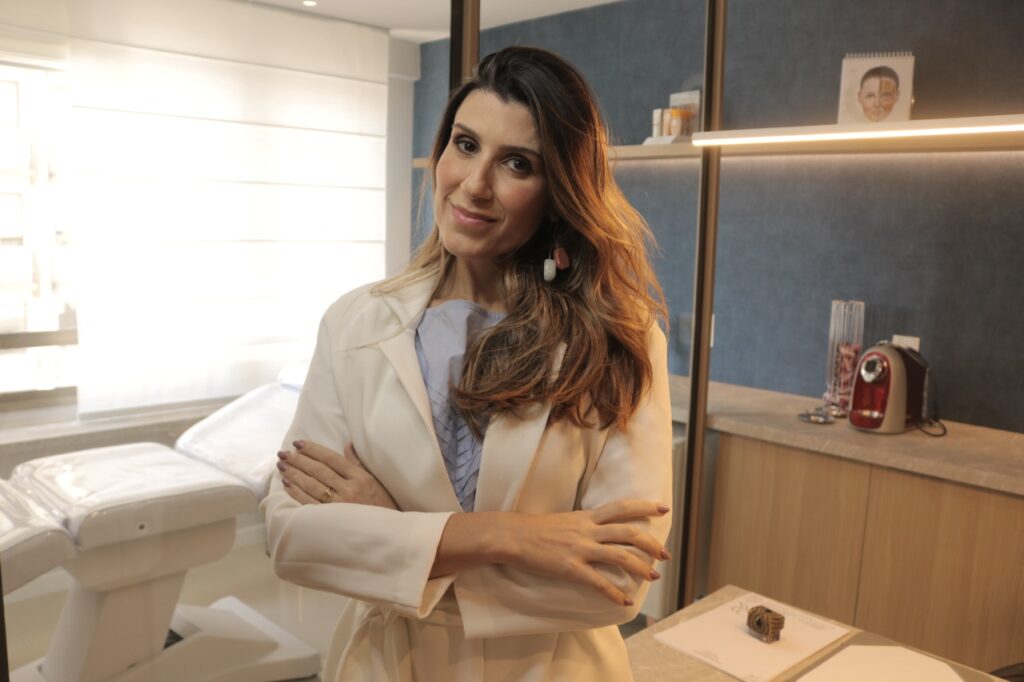
Medical evaluation is essential to understand the patient's complaints, identify dermatological problems, and consider their individual characteristics, such as anatomy, skin type, and reactions to substances used. Based on this, it is possible to determine the appropriate techniques to naturally enhance the features of the face, skin, and body.
Choosing a dermatologist is crucial for a thorough analysis of the areas of disharmony in the patient and to determine the necessary techniques, whether it be increasing volume, correcting angles, or symmetry. With a personalized and exclusive treatment plan, it is possible to meet the specific needs of each patient while respecting their limitations.

Dr. Renata Ralha, Clinical, Aesthetic and Hair Dermatologist, CRM: 52-84102-1 RJ, RQE No.: 28115
Follow our WhatsApp channel: Dr. Renata Ralha!
This channel is for you to stay up-to-date on the best news about... dermatology, aesthetics and skincareIn addition to finding out about all the new publications, promotions and sweepstakes that we offer at the Renata Ralha Clinic!