
Viral skincare trends continue to be popular on social media, but dermatologists warn: combining too many active ingredients without guidance is one of the main causes of damaged skin barrier, leading to irritation, redness, and dryness.
In recent months, videos featuring routines full of potent ingredients and beauty "hacks" have gone viral on TikTok and Instagram, raising an important warning.
Many people arrive at the doctor's office with worse skin than before—not due to lack of care, but due to over-care. This text, based on dermatology, distinguishes what helps from what harms.
Schedule your personalized evaluation with Dr. Renata!
Dermatologist at Nova América
What is the skin barrier and why does it "break down"?
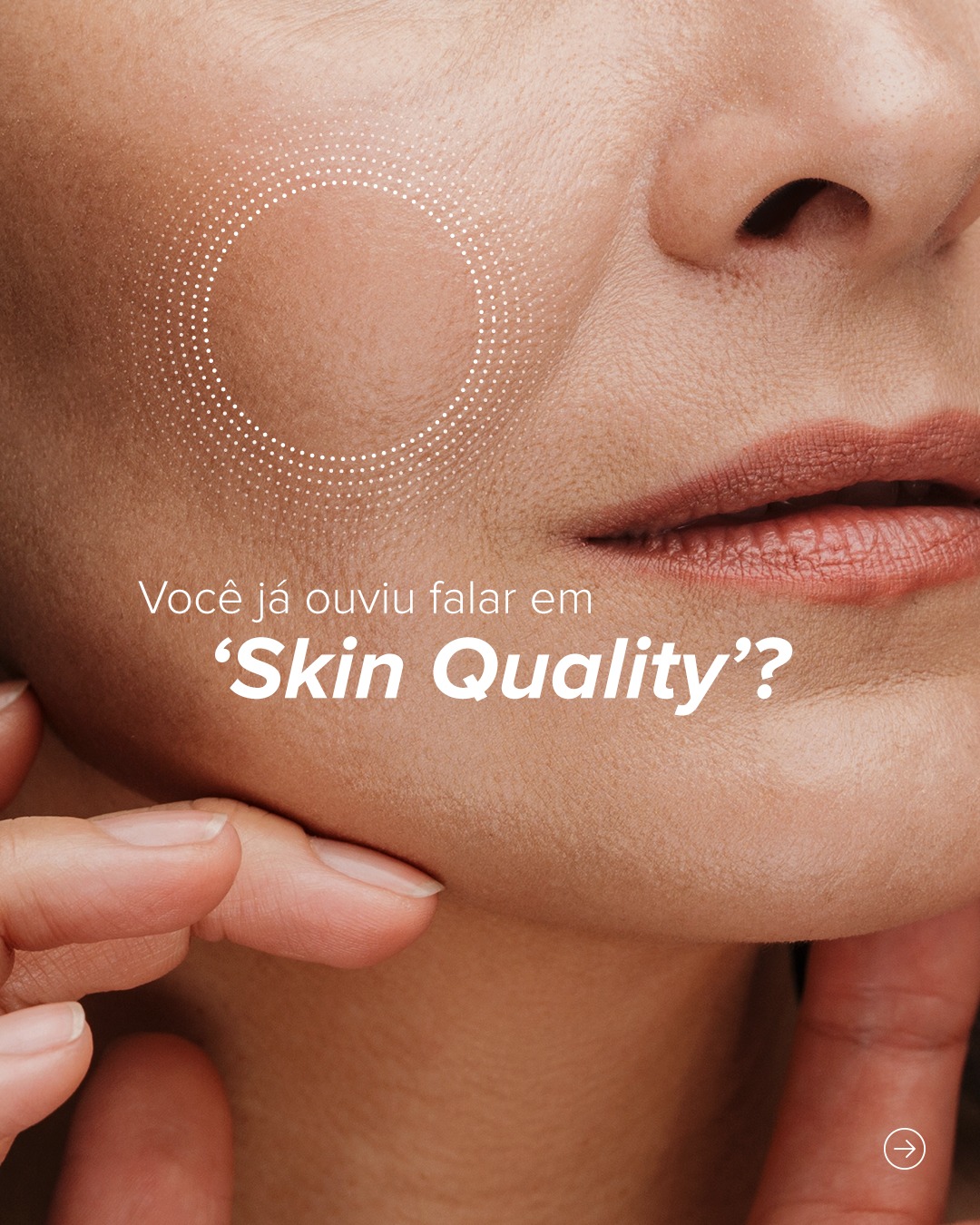
The skin barrier is the outermost layer, made up of cells and lipids that retain water and block external aggressors. It "breaks down" when exposed to repeated aggressions—such as many potent active ingredients, frequent exfoliation, and irritating products—losing its ability to protect and hydrate the skin.
When the barrier is intact, the skin feels comfortable, balanced, and resilient. When it is damaged, sensitivity, redness, and dryness occur.
Many of the problems attributed to "difficult skin" are actually due to a barrier damaged by excessive product use.
Each person's skin has a different tolerance limit, and respecting it is the foundation of any healthy routine.
Which TikTok trends are most damaging to the skin?
The trends that cause the most damage are those that encourage the use of many active ingredients at the same time, frequent exfoliation, "homemade recipes" with irritating ingredients, and long, aggressive routines in pursuit of quick results. The logic of "more products, more ingredients, faster results" usually backfires.
Combining retinoids, exfoliating acids, and vitamin C indiscriminately, for example, overloads the skin and triggers irritation.
Homemade mixtures (such as lemon, baking soda, or cinnamon) are especially dangerous and can cause burns and stains.
The problem is rarely the asset itself, but rather the haphazard way in which it is used.

Is it harmful to mix too many active ingredients?
Yes, you can. Using many potent active ingredients at the same time, without a plan, tends to overload the skin and compromise its barrier, leading to irritation, redness, dryness, and even inflammatory reactions. Each active ingredient has a specific function, and combining them randomly usually causes more problems than benefits.
Active ingredients like retinol and acids have ideal times and frequencies for use, and should not always be used together.
A well-structured routine isn't one with the most products, but rather one with the right products, in the right order and frequency.
What are the signs of a damaged skin barrier?
Signs of a damaged barrier include redness, burning, tightness, peeling, a feeling of skin being "sensitive" to everything, dryness that doesn't improve, and even minor reactions when applying products that were previously tolerated. The skin becomes reactive and uncomfortable.
Another indication is the worsening of symptoms when using the same products that "always worked": the weakened barrier no longer tolerates what it used to tolerate.
When your skin burns or itches after applying moisturizer, it's a clear sign that it needs a break and repair.
Recognizing these signs early prevents the condition from worsening.
How to restore the skin barrier?
To restore the skin barrier, simplify your routine: suspend potent active ingredients and exfoliation, use a gentle cleanser, opt for moisturizers with ceramides, panthenol, niacinamide, and glycerin, and maintain sun protection. The goal is to soothe and rebuild the skin before reintroducing any active ingredients.
Less is more at this moment: the more burdened the barrier, the more it benefits from a lean and restorative routine.
The reintroduction of active ingredients should be gradual and, ideally, guided, so as not to restart the irritation cycle.
Each person's skin recovers at its own pace, so the repair plan should be individualized.
Which viral trends are based on fact and which are not?
Some trends are based on facts, such as the focus on hydration, barrier health, and sun protection. Others are not, such as the use of many acids together, irritating homemade recipes, and the "the more, the better" mentality. The problem with social media is that it takes information out of context, without considering that every skin type is different.
On the positive side, social media has popularized important terms — skin barrier, ceramides, photoprotection — and sparked interest in skincare.
The downside is the indiscriminate application, which transforms good ideas into risky practices.
Filtering out what makes sense for your specific case is precisely the role of dermatological guidance.
How long does it take for the skin to recover?
It depends on the damage, but the barrier usually improves within a few weeks with a simple, restorative routine. Mild cases respond in a few days; more severe cases can take weeks. The important thing is to maintain consistency and avoid reintroducing harsh treatments too soon.
During recovery, it's common for the skin to still feel sensitive for a while, even with visible improvement.
Having patience and not "testing" new products all the time speeds up the process.
If recovery does not occur, a professional evaluation helps to rule out other causes.
When should you see a dermatologist?
See a dermatologist if your skin doesn't improve with simpler routines, if there's persistent redness, intense burning, lesions, significant peeling, or a reaction to multiple products. The evaluation will determine if there's just barrier damage or an associated condition, such as dermatitis.
The professional also helps to establish a safe routine and to reintroduce active ingredients in a planned way, preventing relapses.
Instead of testing trends on your own, a consultation saves you time, money, and discomfort.
Healthy skin is built with a routine tailored to your needs, not with the latest trends.
Conclusion
Social media has popularized skincare, but it has also spread practices that can destroy the skin's barrier. The secret lies not in accumulating active ingredients, but in respecting the skin, simplifying the routine, and prioritizing hydration and sun protection.
Since every skin type has its own needs and limitations, the best routine is an individualized one. Taking good care of your skin is an act based on science, not on viral trends.
If you have any questions or would like to schedule a consultation, please get in touch! I'm here to help you achieve a healthier, more natural version of your skin.


Medical evaluation is essential to understand the patient's complaints, make an accurate diagnosis, and indicate the most appropriate protocol for each case. Each skin type has unique characteristics, and care must be personalized to ensure health and safety. Choosing a dermatologist who is a member of the Brazilian Society of Dermatology is crucial for your skin health.
Dr. Renata Ralha Clinical, Aesthetic and Hair Dermatologist, CRM: 52-84102-1 RJ, RQE No.: 28115
It can work when properly guided. The idea of alternating active ingredients and recovery days is reasonable, but the application depends on your skin type and the products. Guidance prevents overuse.
Generally, no. Ingredients like lemon, baking soda, and cinnamon can irritate and even burn the skin, causing blemishes. Opt for products formulated and tested for skin use.
Not always. Combining retinoids and acids indiscriminately often irritates the skin. The ideal frequency and combination depend on an assessment and your tolerance level.
Not exactly. A damaged barrier leaves the skin reactive, but sensitivity can have other causes. An assessment differentiates between a temporary situation and an underlying condition.
In many mild cases, it helps a lot, especially with ceramides and panthenol. More severe cases may require a specific routine and professional guidance.
Because every skin type has different needs and limitations, and what works for an influencer might harm you. Only an assessment can determine a safe, effective routine that's right for your skin.

Medical evaluation is essential to understand the patient's complaints, identify dermatological problems, and consider their individual characteristics, such as anatomy, skin type, and reactions to substances used. Based on this, it is possible to determine the appropriate techniques to naturally enhance the features of the face, skin, and body.
Choosing a dermatologist is crucial for a thorough analysis of the areas of disharmony in the patient and to determine the necessary techniques, whether it be increasing volume, correcting angles, or symmetry. With a personalized and exclusive treatment plan, it is possible to meet the specific needs of each patient while respecting their limitations.

Dr. Renata Ralha Clinical, Aesthetic and Hair Dermatologist, CRM: 52-84102-1 RJ, RQE No.: 28115

Follow our WhatsApp channel: Dr. Renata Ralha!
This channel is for you to stay up-to-date on the best news about... dermatology, aesthetics and skincareIn addition to finding out about all the new publications, promotions and sweepstakes that we offer at the Clinic Renata Ralha!