
A volta da alopecia areata em Karina Lucco, mãe do cantor Lucas Lucco, trouxe novamente atenção para uma condição que ainda é pouco compreendida. Em relatos públicos anteriores, Karina contou que a alopecia não é apenas uma questão estética: envolve inflamação, impacto emocional, necessidade de tratamento específico e um processo que pode ter fases.
A alopecia areata é uma doença autoimune. Isso significa que o sistema imunológico passa a atacar, por engano, os folículos pilosos, estruturas responsáveis pelo crescimento dos fios. O resultado pode ser queda em falhas arredondadas, perda extensa de cabelo ou, em casos mais raros, perda de pelos em outras áreas do corpo.
A notícia é importante porque ajuda a reduzir o estigma. Queda de cabelo intensa não deve ser tratada como vaidade. Para muitas pessoas, ela afeta identidade, autoestima, segurança e saúde emocional.
Agende sua Avaliação Personalizada com a Dra Renata!
Dermatologista no Nova América
O que aconteceu com a mãe de Lucas Lucco?
Karina Lucco vem compartilhando nas redes sociais sua experiência com alopecia areata, incluindo a evolução dos fios, as falhas, os desafios emocionais e o tratamento. Em uma entrevista ao gshow, ela relatou que o tratamento incluía aplicações de medicações no couro cabeludo, corticoide e outras substâncias, além de medicamento para casos graves, dentro de um protocolo personalizado elaborado por sua médica.
Ela também já falou sobre a escolha de usar lenços ou bonés, em vez de peruca ou lace naquele momento, reforçando que essa decisão é individual. Em outro relato, explicou que, no seu caso, o transplante capilar não seria uma possibilidade por se tratar de uma doença autoimune em atividade.
Esse relato ajuda a mostrar algo importante: a alopecia areata pode ser imprevisível. O cabelo pode voltar a crescer, cair novamente, estabilizar por um tempo ou evoluir de maneiras diferentes em cada paciente.
Resumo: o caso de Karina Lucco chama atenção porque mostra a alopecia como uma doença real, com tratamento, impacto emocional e evolução variável.
O que é alopecia areata?
A alopecia areata é uma doença autoimune em que o sistema imunológico ataca os folículos pilosos, causando queda de cabelo ou de pelos. Ela costuma aparecer em falhas arredondadas no couro cabeludo, mas também pode afetar sobrancelhas, cílios, barba e pelos do corpo.
O ponto importante é que, na maioria dos casos, o folículo não é destruído. Ele fica inflamado e interrompe temporariamente a produção do fio. Por isso, há possibilidade de crescimento novamente, embora a resposta varie bastante de pessoa para pessoa.
Existem diferentes formas de apresentação:
| Tipo | Como aparece |
|---|---|
| Alopecia areata em placas | Falhas arredondadas em uma ou mais áreas |
| Alopecia totalis | Perda de todo ou quase todo o cabelo do couro cabeludo |
| Alopecia universalis | Perda de cabelo e pelos em praticamente todo o corpo |
Resumo: alopecia areata não é calvície comum. É uma doença inflamatória e autoimune que precisa de avaliação dermatológica.
Alopecia areata pode voltar depois de melhorar?
Sim. A alopecia areata pode ter fases de melhora e recaída. Algumas pessoas têm apenas um episódio ao longo da vida, enquanto outras apresentam surtos repetidos. A recuperação é imprevisível: em alguns casos os fios voltam completamente; em outros, a queda persiste ou retorna após um período de estabilidade.
Essa característica explica por que muitos pacientes se sentem frustrados. A melhora inicial pode gerar esperança, mas a doença pode voltar a se manifestar. Isso não significa que o tratamento “não funcionou”. Significa que a alopecia areata tem comportamento variável e exige acompanhamento.
Sinais de possível reativação
- novas falhas arredondadas;
- aumento das áreas sem cabelo;
- queda rápida em poucos dias ou semanas;
- rarefação em sobrancelhas ou cílios;
- fios curtos e quebrados nas bordas das falhas;
- alteração nas unhas, como pequenos furinhos ou fragilidade.
Resumo: recaídas podem acontecer. Por isso, o acompanhamento não deve parar assim que os fios começam a crescer.
Quais são os sintomas da alopecia areata?
O principal sintoma é a queda de cabelo em áreas bem delimitadas, geralmente arredondadas ou ovaladas. A pele costuma ficar lisa, sem descamação importante, feridas ou cicatrizes. Em alguns pacientes, podem surgir alterações nas unhas, como pontos deprimidos, fragilidade ou manchas esbranquiçadas.
A alopecia areata pode surgir de forma silenciosa. Muitas pessoas percebem a primeira falha ao pentear o cabelo, lavar os fios, prender o cabelo ou ir ao cabeleireiro.
Sintomas que merecem atenção
- falhas circulares no couro cabeludo;
- queda repentina de tufos de cabelo;
- perda de sobrancelhas;
- perda de cílios;
- falhas na barba;
- áreas lisas sem cabelo;
- unhas mais frágeis ou com pequenas depressões.
Nem toda queda de cabelo é alopecia areata. Queda difusa pode ocorrer por anemia, alterações da tireoide, pós-parto, infecções, estresse, dietas restritivas, medicamentos, eflúvio telógeno ou alopecia androgenética.
Resumo: falhas localizadas e repentinas são um alerta importante para procurar uma dermatologista.
Alopecia areata é causada por estresse?
O estresse não é considerado a causa única da alopecia areata, mas pode atuar como gatilho em pessoas predispostas. A doença envolve fatores imunológicos, genéticos e ambientais. Em muitos casos, não existe um gatilho claro.
Esse ponto é essencial para evitar culpa. O paciente não “causou” a própria alopecia por ficar ansioso, triste ou sobrecarregado. A doença é imunológica. O controle emocional pode ajudar no cuidado global, mas não substitui tratamento médico.
Na prática clínica, é comum que o paciente pergunte: “Foi estresse?” A resposta mais honesta é: pode ter contribuído, mas raramente explica tudo sozinho.
Resumo: estresse pode participar como gatilho, mas alopecia areata é uma doença autoimune, não uma falha emocional.
Alopecia areata tem cura?
Atualmente, a alopecia areata não tem uma cura definitiva garantida, mas existem tratamentos que podem ajudar no crescimento dos fios e no controle da inflamação. A resposta varia conforme extensão da queda, tempo de doença, idade, áreas afetadas e comportamento imunológico individual.
Algumas pessoas apresentam crescimento espontâneo, especialmente quando há poucas falhas e pouco tempo de evolução. Outras precisam de tratamento tópico, infiltrações, medicações orais ou terapias mais avançadas.
O objetivo do tratamento pode ser:
- reduzir a inflamação no folículo;
- estimular o crescimento dos fios;
- diminuir novas áreas de queda;
- manter os fios que voltaram;
- melhorar qualidade de vida;
- acompanhar sinais de doenças associadas.
Resumo: não existe promessa de cura, mas existe tratamento. Quanto antes avaliar, melhor a chance de conduzir o quadro com segurança.
Como é feito o diagnóstico?
O diagnóstico geralmente é feito pela dermatologista por meio da avaliação clínica do couro cabeludo, dos pelos e das unhas. A dermatoscopia, exame feito com uma lente de aumento específica, pode ajudar a observar sinais característicos da alopecia areata. Em alguns casos, podem ser solicitados exames de sangue ou biópsia do couro cabeludo.
A avaliação médica também ajuda a diferenciar alopecia areata de outras causas de queda capilar, como:
- eflúvio telógeno;
- alopecia androgenética;
- alopecia por tração;
- dermatite seborreica;
- micose do couro cabeludo;
- lúpus cutâneo;
- alopecias cicatriciais;
- deficiência de ferro, vitamina D ou alterações da tireoide.
Esse diagnóstico diferencial é importante porque o tratamento muda completamente de acordo com a causa.
Resumo: não se deve tratar queda de cabelo no escuro. O diagnóstico correto define a melhor conduta.
Quais são os tratamentos para alopecia areata?
O tratamento depende da extensão da queda, tempo de evolução, idade, áreas afetadas e impacto emocional. Não existe um protocolo único para todos. Entre as opções descritas por sociedades dermatológicas estão corticoides tópicos ou injetáveis, minoxidil, imunoterapia de contato, medicamentos sistêmicos e, em casos extensos selecionados, inibidores da via JAK.
Principais opções que podem ser avaliadas
| Tratamento | Quando pode ser considerado |
| Corticoide tópico | Falhas localizadas, especialmente em crianças ou casos leves |
| Corticoide intralesional | Placas localizadas em adultos, quando indicado |
| Minoxidil | Ajuda a estimular e manter crescimento em alguns casos |
| Imunoterapia de contato | Quadros mais extensos, em centros especializados |
| Medicamentos orais | Casos moderados a graves ou persistentes |
| Inibidores de JAK | Alopecia extensa ou grave, em pacientes selecionados |
A American Academy of Dermatology explica que inibidores de JAK podem acalmar a resposta imune hiperativa e já são uma opção para alguns quadros extensos de alopecia areata, mas exigem avaliação criteriosa por causa de indicação, riscos, contraindicações e acompanhamento.
Resumo: alopecia areata tem tratamento, mas a escolha deve ser individualizada e acompanhada por dermatologista.
Transplante capilar resolve alopecia areata?
Em geral, o transplante capilar não é a primeira escolha para alopecia areata, especialmente quando a doença está ativa. Como o problema é autoimune, o sistema imunológico pode continuar atacando os folículos. No relato de Karina Lucco, ela explicou que, no caso dela, não havia indicação de transplante e que precisaria seguir com aplicações e medicação oral.
É diferente de outras formas de queda capilar, como a alopecia androgenética, em que o transplante pode ter indicação em casos selecionados. Na alopecia areata, o foco inicial costuma ser controlar a inflamação e recuperar a atividade dos folículos.
Resumo: transplante não trata a causa imunológica da alopecia areata e pode não ser indicado em doença ativa.
Como cuidar do couro cabeludo durante o tratamento de alopecia?
Durante o tratamento da alopecia areata, o couro cabeludo precisa ser cuidado com gentileza. A pele exposta pode ficar mais sensível ao sol, ao atrito e a produtos irritantes.
Cuidados úteis
- usar protetor solar ou barreira física quando o couro cabeludo estiver exposto;
- evitar tração intensa, penteados apertados e megahair;
- não usar fórmulas caseiras irritantes;
- evitar automedicação com corticoides;
- manter o couro cabeludo limpo, sem agressão;
- avisar a dermatologista sobre coceira, dor, descamação ou feridas;
- seguir o intervalo correto das aplicações ou medicações.
Lenços, bonés, turbantes, perucas ou lace podem ser usados, se a pessoa desejar. Mas essa escolha deve ser respeitada. Algumas pacientes preferem cobrir; outras preferem não cobrir. Não existe uma decisão “certa” para todos.
Resumo: proteger o couro cabeludo e respeitar a escolha estética do paciente faz parte do tratamento.
Qual é o impacto emocional da alopecia?
O impacto emocional pode ser profundo. A queda de cabelo mexe com identidade, feminilidade, imagem, autoconfiança e relações sociais. Karina Lucco descreveu publicamente que a alopecia não é apenas queda de cabelo, mas também processo inflamatório, impacto emocional e necessidade de tratamento específico.
Esse ponto precisa ser levado a sério. Dizer “é só cabelo” pode invalidar a dor do paciente. Para algumas pessoas, perder os fios significa perder uma parte importante da própria expressão.
Apoio psicológico pode ser útil, especialmente quando há:
- ansiedade intensa;
- isolamento social;
- vergonha de sair;
- dificuldade de se olhar no espelho;
- medo constante de piora;
- impacto no trabalho ou vida afetiva.
Resumo: tratar alopecia areata não é apenas estimular fios. É cuidar da pessoa que está vivendo o processo.
Quando procurar uma dermatologista?
Procure uma dermatologista se você notar falhas arredondadas no couro cabeludo, queda repentina, perda de sobrancelhas ou cílios, áreas lisas sem fios, alterações nas unhas ou queda que progride rapidamente.
Também é importante buscar avaliação se a queda vem acompanhada de dor, descamação intensa, feridas, secreção, vermelhidão persistente ou cicatrizes.
A consulta permite:
- confirmar o diagnóstico;
- avaliar extensão da alopecia;
- identificar sinais de atividade;
- solicitar exames quando necessário;
- diferenciar de outras causas de queda;
- indicar tratamento adequado;
- acompanhar resposta ao longo do tempo.
Resumo: quanto mais cedo o diagnóstico, mais rápido é possível orientar o tratamento e evitar medidas inadequadas.
Conclusão
A volta da alopecia areata em Karina Lucco, mãe de Lucas Lucco, ajuda a trazer visibilidade para uma doença que ainda é cercada de dúvidas. A alopecia areata não é apenas queda de cabelo. É uma condição autoimune, inflamatória, imprevisível e, muitas vezes, emocionalmente difícil.
Ela pode melhorar, voltar, estabilizar ou evoluir de forma diferente em cada pessoa. Não há promessa de cura definitiva, mas há tratamentos capazes de estimular o crescimento dos fios e controlar a atividade da doença em muitos casos.
O mais importante é não se automedicar e não tratar toda queda capilar como se fosse igual. Falhas no couro cabeludo merecem avaliação dermatológica, diagnóstico correto e um plano individualizado.

A avaliação médica é essencial para compreender as queixas do paciente, identificar problemas dermatológicos e considerar suas características individuais, como anatomia, tipo de pele e reações a substâncias utilizadas. Com base nisso, é possível determinar as técnicas adequadas para valorizar naturalmente as características do rosto, pele e corpo.
A escolha de um Dermatologista é crucial para realizar uma análise minuciosa das regiões em desarmonia no paciente e determinar as técnicas necessárias, seja aumentando o volume, corrigindo ângulos ou simetria. Com um plano de tratamento personalizado e exclusivo, é possível atender às necessidades específicas de cada paciente respeitando seus limites.
Dra. Renata Ralha Dermatologista Clínica, Estética e Capilar , CRM: 52-84102-1 RJ, RQE N°: 28115
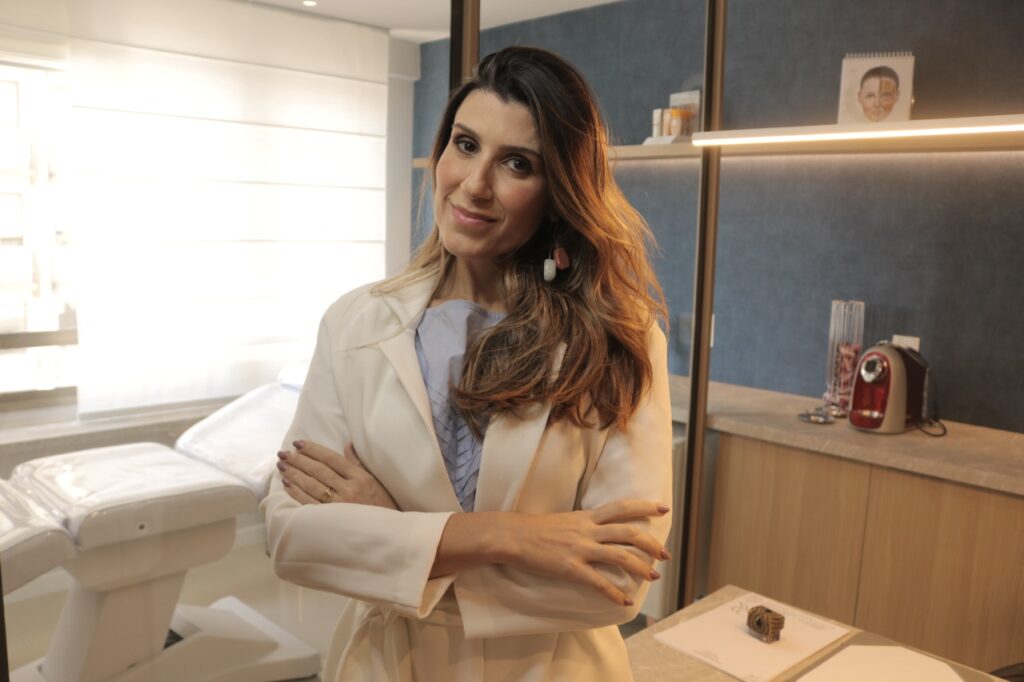

Dra. Renata Ralha Dermatologista Clínica, Estética e Capilar , CRM: 52-84102-1 RJ, RQE N°: 28115
Não. Alopecia areata não é contagiosa. É uma doença autoimune, ou seja, relacionada a uma resposta equivocada do sistema imunológico contra os folículos pilosos.
Não. A calvície comum, chamada alopecia androgenética, tem mecanismo diferente. A alopecia areata costuma causar falhas arredondadas e pode surgir de forma repentina.
Sim, pode. Como o folículo geralmente não é destruído, há possibilidade de crescimento. Porém, a resposta varia e pode haver recaídas.
Estresse pode atuar como gatilho em pessoas predispostas, mas não é a causa única. A alopecia areata envolve fatores imunológicos, genéticos e ambientais.
Sim. A alopecia areata pode ocorrer em crianças, adolescentes e adultos. Quando começa antes dos 10 anos, pode ter tendência a ser mais extensa ou progressiva.
Pode funcionar em alguns casos, especialmente quando há falhas localizadas, mas precisa de indicação médica. O uso incorreto pode causar efeitos colaterais.
O minoxidil pode ajudar a estimular ou manter crescimento em alguns casos, geralmente como parte de um protocolo. Ele não trata sozinho a causa autoimune.
Não. São medicamentos para casos selecionados, especialmente quadros extensos ou graves, e exigem avaliação de riscos, exames e acompanhamento médico.
Sim. A escolha é individual. O importante é que não cause tração, irritação ou desconforto no couro cabeludo.
Procure avaliação rapidamente se a queda for súbita, em placas, progressiva, associada a sobrancelhas/cílios, ou se houver dor, feridas, vermelhidão intensa ou sinais de cicatriz.
Siga nosso Canal no WhatsApp: Dra. Renata Ralha!
Esse canal é feito para vocês ficarem por dentro das melhores novidades sobre dermatologia, estética e skincare. Além de ficar sabendo de todas as novas publicações, promoções e sorteios que oferecemos na Clínica Renata Ralha!